Best Lab-Grown Diamond Tennis Bracelets Under $500 for the Sustainability-Minded Woman in 2026
Editorial Research Roundup — compiled from secondary sources, not personal hands-on testing. This guide synthesizes retailer-verified specs, published jeweler guidance (Ritani, Brilliant Earth, Clean Origin), 2026 editorial coverage (Who What Wear, StyleCaster, WWD), and community consensus from r/labgrowndiamonds and r/Moissanite. We have not personally worn or graded every bracelet here. As an Amazon Associate and an affiliate for select jewelry retailers, BestUnderPick may earn a commission from qualifying purchases at no extra cost to you.
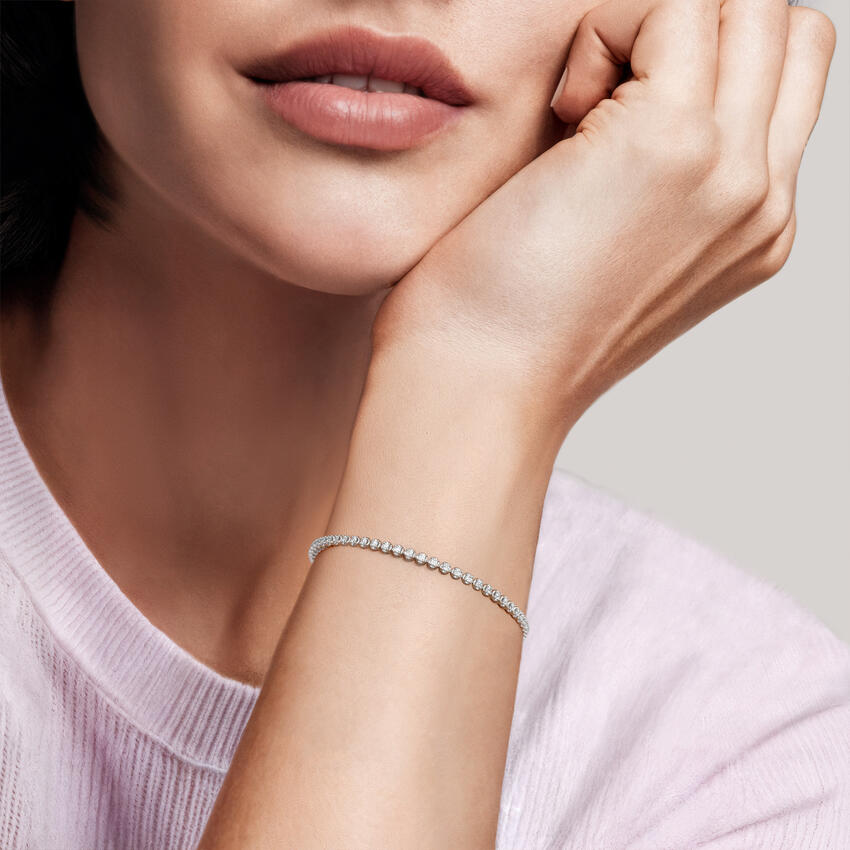
A real diamond tennis bracelet for less than the cost of a weekend trip used to be a contradiction. In 2026 it is a checkout button. Lab-grown wholesale prices have fallen so steeply as growing capacity scaled up that a full carat of genuine, independently graded lab diamonds now lands comfortably under $500 — and that single shift is what put fine jewelry back in reach for shoppers who refuse to choose between their values and actual sparkle.
If you have been circling a tennis bracelet for a while but stalled on the ethics, the price, or the nagging question of whether “cheap” means “fake,” this list is built for you. Here is the honest catch that most “affordable” roundups bury or quietly dodge: under $500, you are buying sterling silver set with real lab-grown diamonds, not solid gold. The premium sustainability houses everyone name-drops — Brilliant Earth, Clean Origin, VRAI, Quince — start their tennis bracelets closer to $1,400 and climb from there. So the in-budget money sits with a small handful of mainstream jewelers, and the smart play is to judge them on stone grade, certification, and clasp security rather than on a gold stamp nobody at this price can give you.
After cross-checking retailer specs, published jeweler guidance, and 2026 fashion coverage, two names hold up as the genuinely in-band, in-stock anchors of this category. Below they sit alongside a budget entry point and an aspirational splurge, each scoped honestly so you know exactly what your money buys.
Quick comparison at a glance
| Pick | Best for | Carat / metal | Stated grade & cert | Price |
|---|---|---|---|---|
| Zales 1 CT Lab-Grown | Top Pick — best stated grade in band | 1 ctw / sterling silver | F color, VS2 clarity | $499.98 |
| Ross-Simons 1.00 ct. | Best Value — lowest verified real-metal price | 1 ctw / sterling silver | “lab-grown,” grade less specified | ~$399 |
| Amazon Essentials 14K | Conditional — only solid-gold contender | 1 ct / solid 14K white gold | VS1–VS2, IGI stated, double-lock clasp | Fluctuates near $500 — confirm live |
| Macy’s / Walmart budget | Entry point to try real lab diamonds | 1 ctw / sterling silver | “lab-grown / lab-created” | ~$150–$350 on sale |
| Brilliant Earth 1 ct (splurge) | Most sustainable, investment-grade build | 1 ctw / 18K white gold | F/G, VS, per-piece IGI | $1,895 |
Prices reflect retailer listings checked at publication and shift with frequent jewelry promotions — always confirm the live price and current stock before you buy.
How this guide was compiled
This roundup is research curation, not a personal try-on. Four steps shaped it:
- Community consensus. We read the recurring themes across r/labgrowndiamonds and r/Moissanite — chiefly the repeated warnings that sterling silver is the honest metal under $500, that box clasps are the category’s weak point, and that “lab-created” labeling at mass retailers can be vaguer than per-stone reports from specialty brands.
- Published jeweler guidance. We leaned on educational material from Ritani, Brilliant Earth, and Clean Origin covering how lab diamonds are grown (HPHT and CVD), why IGI and GIA grading matters, and the resale reality buyers should expect.
- Retailer-verified specs. We pulled stated color, clarity, carat, metal, and certification directly from each product listing — Zales’ F/VS2 grade and Ross-Simons’ 1.00 ctw sterling silver build were confirmed against their live pages.
- Editorial cross-check. We compared the picture against 2026 coverage of affordable and “quiet luxury” jewelry from Who What Wear, StyleCaster, and WWD to confirm where the real price floors sit.
Where the evidence converges, we state the consensus plainly. Where opinions split — stone grade, clasp safety, what “sustainable” actually means — we surface the disagreement instead of papering over it.
First, the 60-second lab-grown explainer
A lab-grown diamond is chemically and optically a diamond — same carbon crystal, same hardness, same fire — produced in a reactor over weeks rather than pulled from a mine. Two methods dominate: HPHT (high pressure, high temperature) and CVD (chemical vapor deposition). Reputable stones ship with grading from an independent lab such as IGI or GIA, scored on the same color and clarity scales as mined diamonds. Per Ritani and Brilliant Earth’s published explainers, the gemological takeaway is simple: a well-graded lab diamond is a real diamond, full stop. The differences that matter for this list are price, resale, and the energy used to grow the stone — covered honestly below.
The picks
Top Pick — Zales 1 CT T.W. Lab-Grown Diamond Tennis Bracelet, Sterling Silver
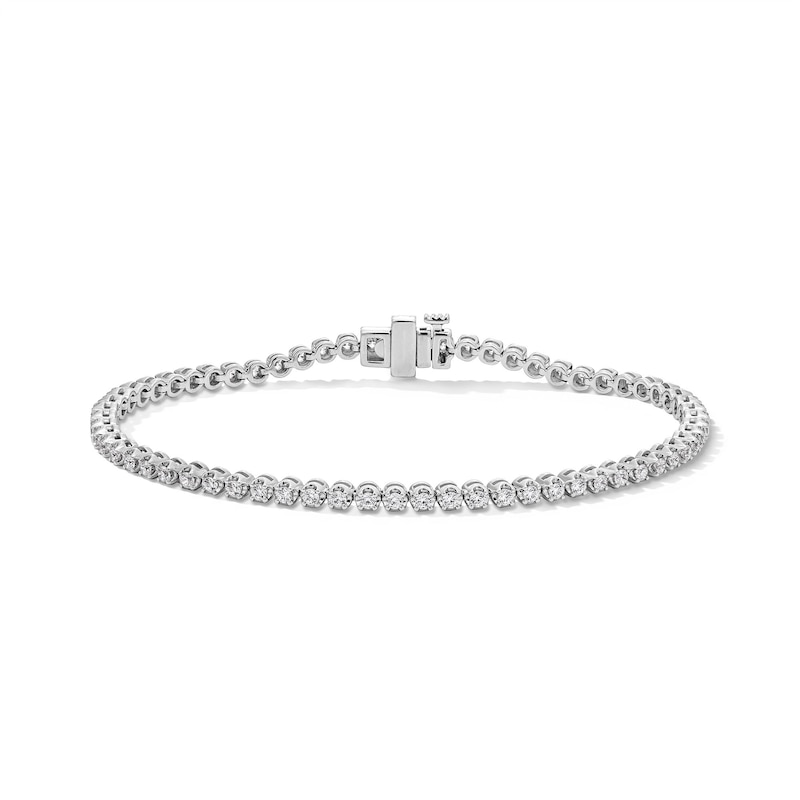
$499.98 · 1 ctw lab-grown · F color / VS2 clarity · sterling silver · box clasp · ~7 in
If you want the strongest stone quality you can verify within the budget, Zales sits at the top. The listed F color, VS2 clarity is the best-stated grade among the in-band options we checked — F is firmly in the colorless range, and VS2 is eye-clean to all but a loupe-wielding jeweler. Per Zales’ product specs, it’s a classic four-prong line in sterling silver, sold by an established US retailer with physical stores, which matters more than shoppers expect when a clasp needs service or a return needs handling in person.
What reviewers and specs support: the near-colorless, eye-clean grade does the heavy lifting visually; the buttercup-style setting reads classic rather than trendy; brand-and-store backing gives recourse that a marketplace listing can’t.
Recurring complaints: sterling silver tarnishes and needs occasional polishing in a way gold does not — a documented trade-off across the category, not a defect. The box clasp is the security weak point community threads flag most often on tennis bracelets, so a safety check at purchase is wise. The listing is also thin on whether a per-piece IGI report ships in the box.
Best fit for the Sustainability-Minded reader: real lab stones, the strongest stated quality in band, and reputable-retailer trust — the lowest-risk way to own a genuine diamond tennis bracelet under $500.
Check the live price at Zales →
Best Value — Ross-Simons 1.00 ct. t.w. Lab-Grown Diamond Tennis Bracelet, Sterling Silver
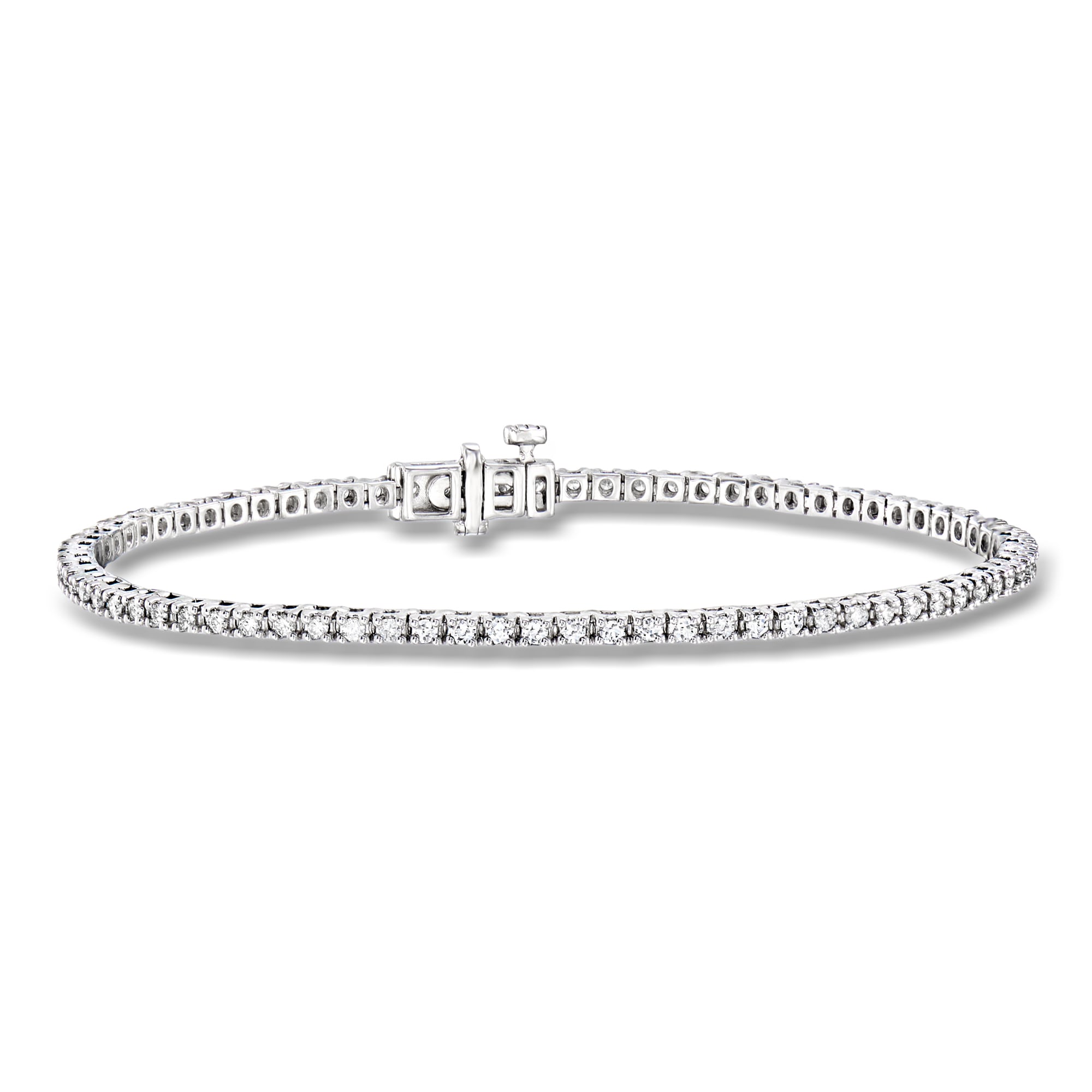
~$399 · 1.00 ctw lab-grown · sterling silver · four-prong · ~7 in · gift box
Ross-Simons is the lowest verified real-metal price in the category, and we confirmed the $399 listing live against the retailer’s own structured product data, in stock, on the lab-grown line. For a value-first buyer, the math is the whole pitch: a full carat of genuine lab diamonds, in real sterling silver, from an established fine-jewelry seller, for roughly a hundred dollars less than the Top Pick.
What reviewers and specs support: an established jeweler with decades of catalog history; the classic four-prong silhouette; a gift box that makes it self-gift or present ready out of the door.
Recurring complaints: the listing states “lab-grown” but is less explicit about color and clarity grade than Zales, so you are trusting the retailer rather than a printed grade. As with every silver piece here, expect tarnish maintenance. And because Ross-Simons leans heavily on promotional pricing, confirm the live number before checkout — the strike-through MSRP is optics, the sale price is the real price.
Best fit for the Sustainability-Minded reader: the cleanest “real diamond, lighter footprint, less money” story on the list — maximum carat-per-dollar without dropping to a no-name listing.
Check the live price at Ross-Simons →
Best Splurge / Most Sustainable — Brilliant Earth 1 ct tw Certified Lab Diamond Tennis Bracelet, 18K White Gold
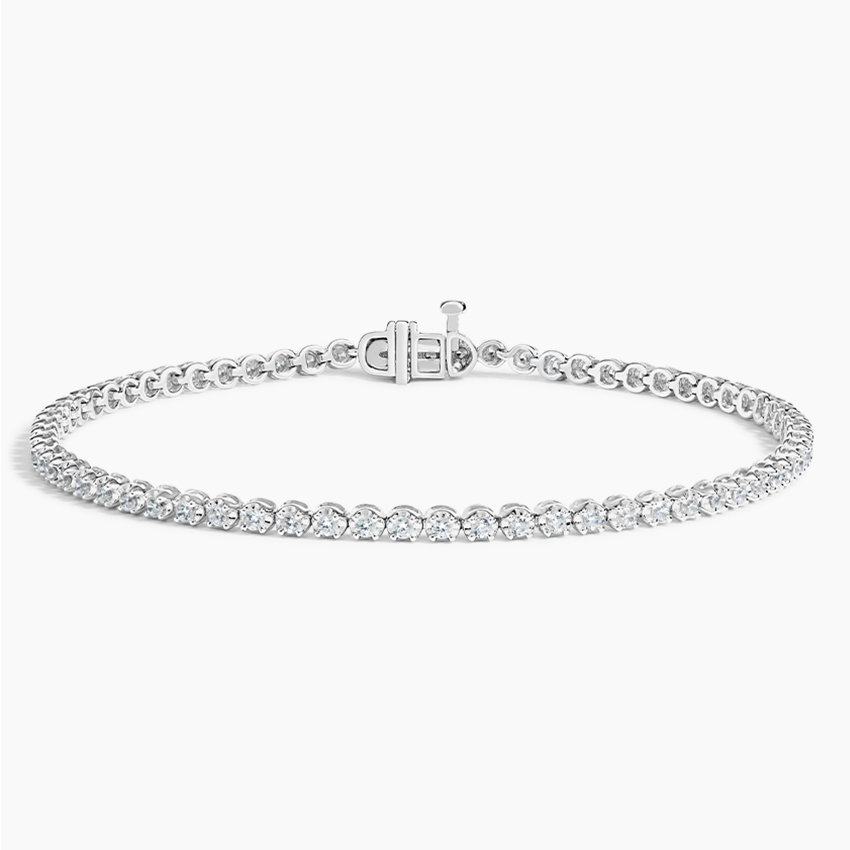
$1,895 · 1 ctw lab-grown · F/G color, VS clarity · 18K white gold · per-piece IGI report
This one is deliberately over budget, and it earns its place by showing what the next tier actually buys. At $1,895 the Brilliant Earth bracelet is roughly four times the in-band picks — but it answers nearly every compromise above: solid 18K white gold instead of silver (no tarnishing, far more durable), a per-piece IGI grading report rather than program-level labeling, and the strongest sustainability credentials of the set, including recycled and traceable metal and renewable-energy sourcing claims. Per Brilliant Earth’s published material, this is the brand built around exactly the values our reader cares about.
What reviewers and specs support: the gold-standard combination for the persona — traceable materials, independent per-stone certification, and a build meant to last decades rather than seasons.
Recurring complaints: the price is the obvious one; made-to-order pieces carry lead times; and even at this level the box clasp is a category-wide reality, not a brand flaw.
Best fit for the Sustainability-Minded reader: the aspirational anchor — proof of what “investment-grade sustainable” costs, and a worthwhile stretch if your real budget can flex past $500.
Two more options worth knowing about
The only solid-gold contender (conditional): Amazon Essentials IGI 1 Carat Lab-Grown Diamond Tennis Bracelet, Solid 14K White Gold. On paper this is the most interesting pick of all — solid 14K white gold, stated IGI certification, VS1–VS2 clarity, and a double-locking clasp that directly fixes the category’s number-one complaint. The honest caveat: its listed price moves around the $500 line depending on size and variant, and we could not lock a confirmed in-budget number at publication. Treat it as a stretch pick — if the live price reads at or under $500 when you check, it’s arguably the best value-plus-ethics combination here; if it’s over, it belongs with the splurges. Confirm before you buy, and verify the IGI report is per-bracelet, not program-level. Check the live Amazon price →
The budget entry point: Macy’s “Forever Grown Diamonds” lab-grown 1 ct, sterling silver (alt: Walmart “Brilliance Fine Jewelry” 1 ct). If you mostly want to try a real lab-diamond tennis bracelet without a four-hundred-dollar commitment, the mass-retailer budget tier runs roughly $150–$350 on sale. Two honesty flags: make sure you are buying the actual lab-grown line (Macy’s “Forever Grown” is lab-grown; some adjacent SKUs are natural diamond at very different pricing), and note that gold-plated silver variants can show plating wear at the clasp over time. Lowest entry to genuine sparkle — just go in clear-eyed on finish and longevity.
Four honesty boxes before you buy
1. Under $500 means sterling silver, not gold. With the lone conditional exception of the Amazon 14K piece, every genuinely in-budget option here is sterling silver (or plated silver at the very bottom). If you specifically want solid gold, the real floor is closer to $700 at the same retailers and $1,400+ at the sustainability houses. Knowing this up front spares you the disappointment of expecting a metal the price simply can’t deliver.
2. Lab-grown resale value is near zero — buy for joy, not investment. This is the single most important thing for a values-driven buyer to hear. Because lab-grown wholesale prices have fallen so sharply, resale recovery is minimal; per resale-market patterns reported by platforms like The RealReal and Fashionphile, lab-grown pieces command a small fraction of retail secondhand. Buy a bracelet you’ll genuinely wear and love. Do not buy it as a store of value.
3. “Sustainable” depends on the grid. Growing diamonds is energy-intensive, so a lab stone is only as green as the electricity behind it. Growers running on renewable energy with credible certification (Brilliant Earth and VRAI make the strongest published claims) have a far better environmental story than mass-market stones grown on unknown power. Don’t accept a flat “lab equals eco-friendly” — ask who grew it and how it was powered.
4. Certification varies — and it’s how you tell tiers apart. Specialty brands ship a per-stone IGI report; mass retailers often state “lab-created” with less detail. Among the in-band picks, Zales (F/VS2) and the Amazon Essentials listing (IGI stated) are the most transparent on grade; Ross-Simons and the budget tier ask you to trust the retailer more. None of that makes the cheaper stones fake — it just changes how much documentation you get.
How to choose your tennis bracelet
Mind the clasp first. A tennis bracelet’s entire value sits on a single closure, and the box clasp common at this price is the most-flagged failure point in community threads. Look for a figure-eight safety catch or a double-locking clasp (the Amazon pick’s standout feature), and have a jeweler check the closure at purchase.
Let clarity be naked-eye-clean, not flawless. Under $500 you’re in SI territory, and that’s fine — at tennis-bracelet stone sizes, inclusions in an SI grade are invisible without magnification. Chasing VVS here just spends money you can’t see. Zales’ VS2 is a genuine step up if grade is your priority; otherwise eye-clean is the honest target.
Accept the metal reality. Sterling silver is the in-budget metal. Plan on occasional polishing, store it dry, and keep it away from lotions and pools. If tarnish-free, decades-long wear is non-negotiable, that’s your signal to save toward the gold tier rather than force it under $500.
Get the fit right. Most of these run about 7 inches. A tennis bracelet should sit snug enough not to spin but loose enough to slide a fingertip under — too loose and the clasp takes abuse it isn’t built for. Check the listed length and whether sizing or extra links are offered.
FAQ
Are lab-grown diamond tennis bracelets worth it? For everyday sparkle and value, yes — you get a genuine, independently graded diamond look for a fraction of the mined-diamond price. As a financial asset, no; resale is minimal. Buy for wear and joy, per the consensus across jeweler guidance and community threads.
Do lab-grown diamonds have resale value? Very little. Wholesale prices have dropped sharply as supply scaled, so secondhand recovery is low across the market. This is consistent across resale-platform pricing and is the reason every honest guide frames these as “buy because you love it.”
Is a $500 lab-grown diamond bracelet real? Yes — the diamonds are real lab-grown diamonds, typically about 1 carat total. What’s “downgraded” at this price is the metal (sterling silver, not gold) and sometimes the grading detail, not the authenticity of the stones.
What carat can I get for a tennis bracelet under $500? Right around 1 carat total weight of lab-grown diamonds in sterling silver, which is the standard you’ll see at Zales, Ross-Simons, and the budget retailers. Solid-gold versions at the same carat generally start near $700.
How do I know it’s actually lab-grown and not cubic zirconia or moissanite? Read the listing carefully: it should say “lab-grown diamond” (not “diamond simulant,” “CZ,” or “moissanite”) and ideally cite IGI or GIA grading. Several “affordable tennis bracelet” lists quietly swap in simulants under $500 — every pick here is a genuine lab diamond.
Editor’s pick recap
If you want the safest, best-graded bet, the Zales F/VS2 at $499.98 is the Top Pick. If value drives you, the Ross-Simons at ~$399 is the lowest verified real-metal price and our Best Value. Curious whether solid gold is reachable? Watch the Amazon Essentials 14K live price and pounce if it dips at or under $500. Want to dip a toe first? The Macy’s/Walmart budget tier (~$150–$350) is the entry point. And if your budget can stretch, the Brilliant Earth 18K at $1,895 is the most sustainable, longest-lasting build on the list.
One last reminder: this is an editorial research roundup, not personal hands-on testing. We’ve scoped each option honestly from retailer specs, published jeweler guidance, 2026 editorial coverage, and community consensus — but prices and stock move fast in jewelry, so confirm the live listing before you buy, and judge sustainability by who grew the stone and how it was powered.