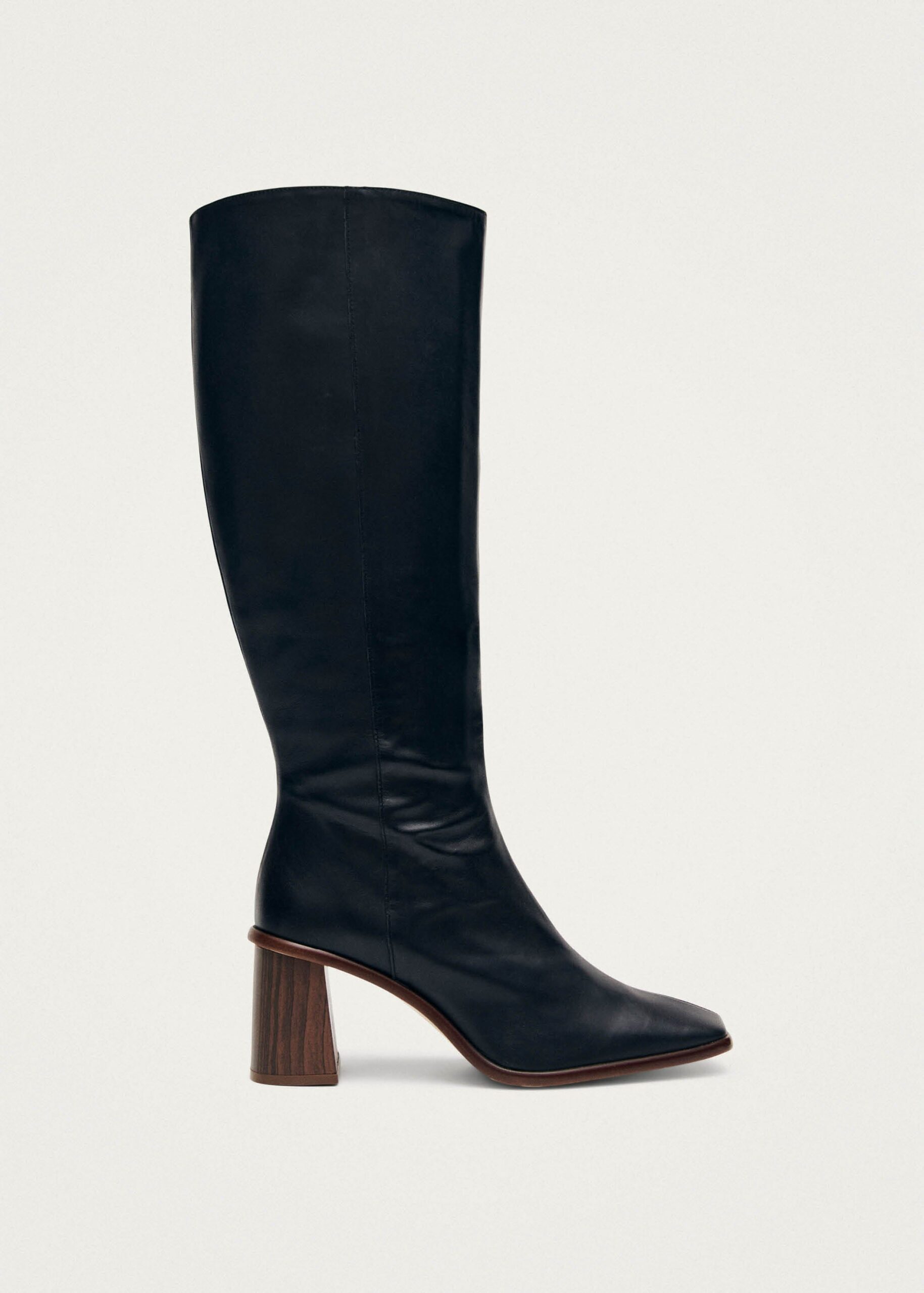
Best Sustainable Leather Boots Under $450 for Sustainability-Minded Women (Fall 2026): Knee-High & Riding Picks With Calf Widths
Editorial Research Roundup — compiled from secondary sources and brand-published specifications, not personal hands-on testing. This guide synthesizes sustainability-focused editorial coverage (The Good Trade, Good On You, Conscious Life & Style, Sustainable Jungle) with product data read directly from each brand’s US storefront on July 22, 2026. We have not worn these boots. As an Amazon Associate and an affiliate for the retailers named below, BestUnderPick may earn from qualifying purchases at no extra cost to readers.
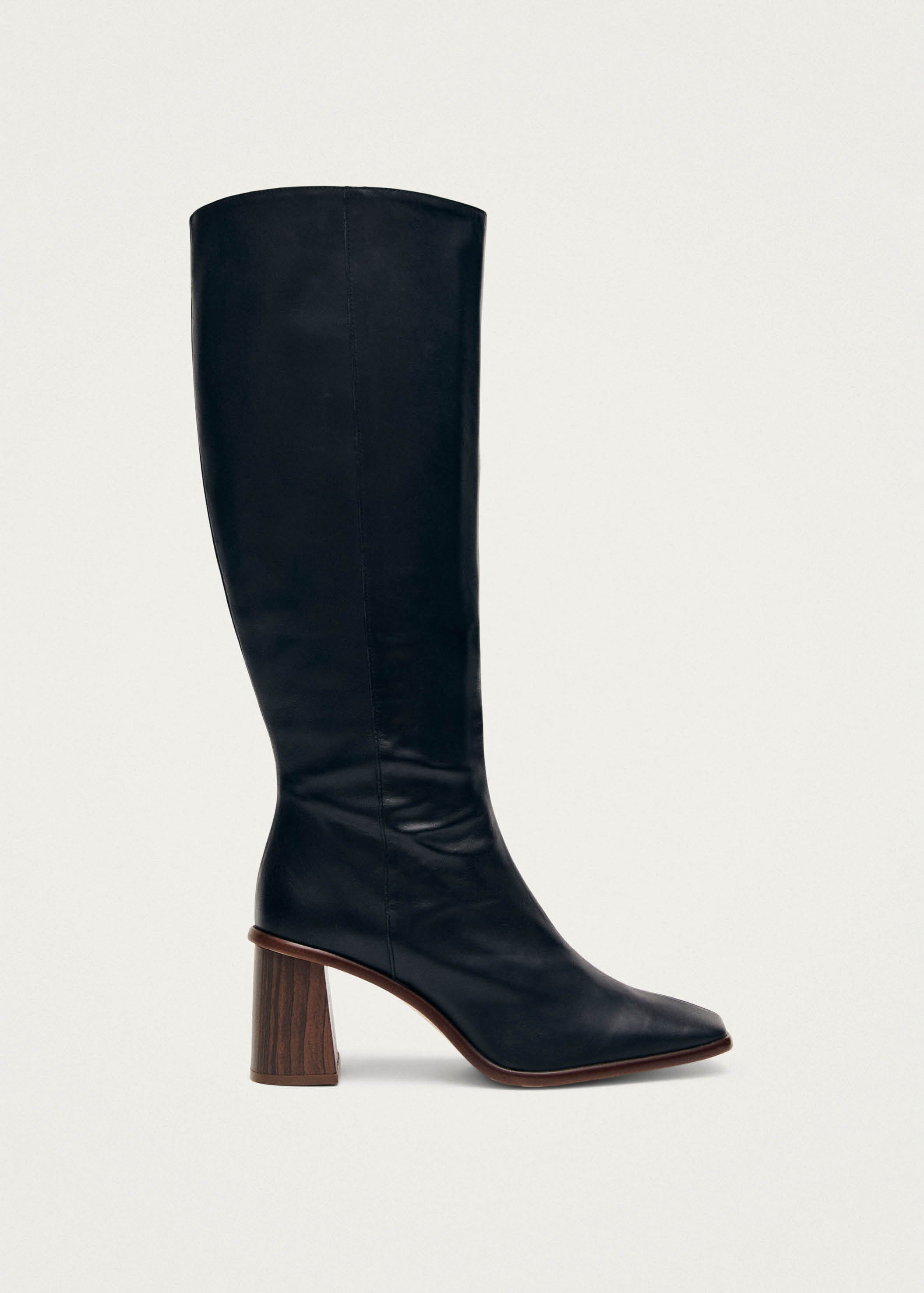
Late July is when US interest in fall boots turns upward, and the guides that own this category are perennial — refreshed every autumn rather than written fresh. That makes now the honest moment to look, before the seasonal rush makes every listing feel urgent.
Here is the tension those guides leave alone: credible sustainable boots are usually presented as though budget is not a variable. Of the five most visible roundups we examined, not one filters by price. Their lineups drift past $450 into the $700s, mix euro and dollar figures, and rarely separate list price from sale price.
So the myth worth breaking is that responsible construction must begin above a normal budget. It does not — three mechanisms make the $315–$450 window possible: on-demand production, LWG-certified tanneries, and brand-owned factories. What follows is what each actually buys you, which boots deliver it, and where the evidence gets thin.
If you are the kind of shopper who can spot performative sustainability marketing from a distance, and you have been putting off knee-high boots because you could not find a pair that was both defensible and affordable, this one is written for you.
How This Guide Was Compiled
- Editorial aggregation. We reviewed five of the highest-visibility sustainable-boot guides currently indexed — from The Good Trade, Good On You, Conscious Life & Style and Sustainable Jungle — for which brands recur, and on what grounds.
- Brand verification. Every price, size run and stock status below was read from the brand’s own US storefront on July 22, 2026. Where a brand geo-redirects to non-US pricing, we forced the US market before recording a figure.
- Specification extraction. Calf circumference, heel height and composition come from brand-published data — never estimated. Where a brand publishes nothing, this guide prints not published.
- Certification cross-check. We separated third-party certification (verifiable by an outside body) from brand-stated practice (the brand’s own description of what it does). These are not equivalent, and this guide does not present them as though they are.
What we could not establish: we found no high-engagement Reddit thread or large-audience video review for this category and band. Where popular guides imply community consensus, we decline to manufacture one. Claims below are attributed to a named source or to the brand itself.
Quick Comparison
| Boot | Silhouette | Price | Leather & Basis | Sizes | Calf Circumference | Heel |
|---|---|---|---|---|---|---|
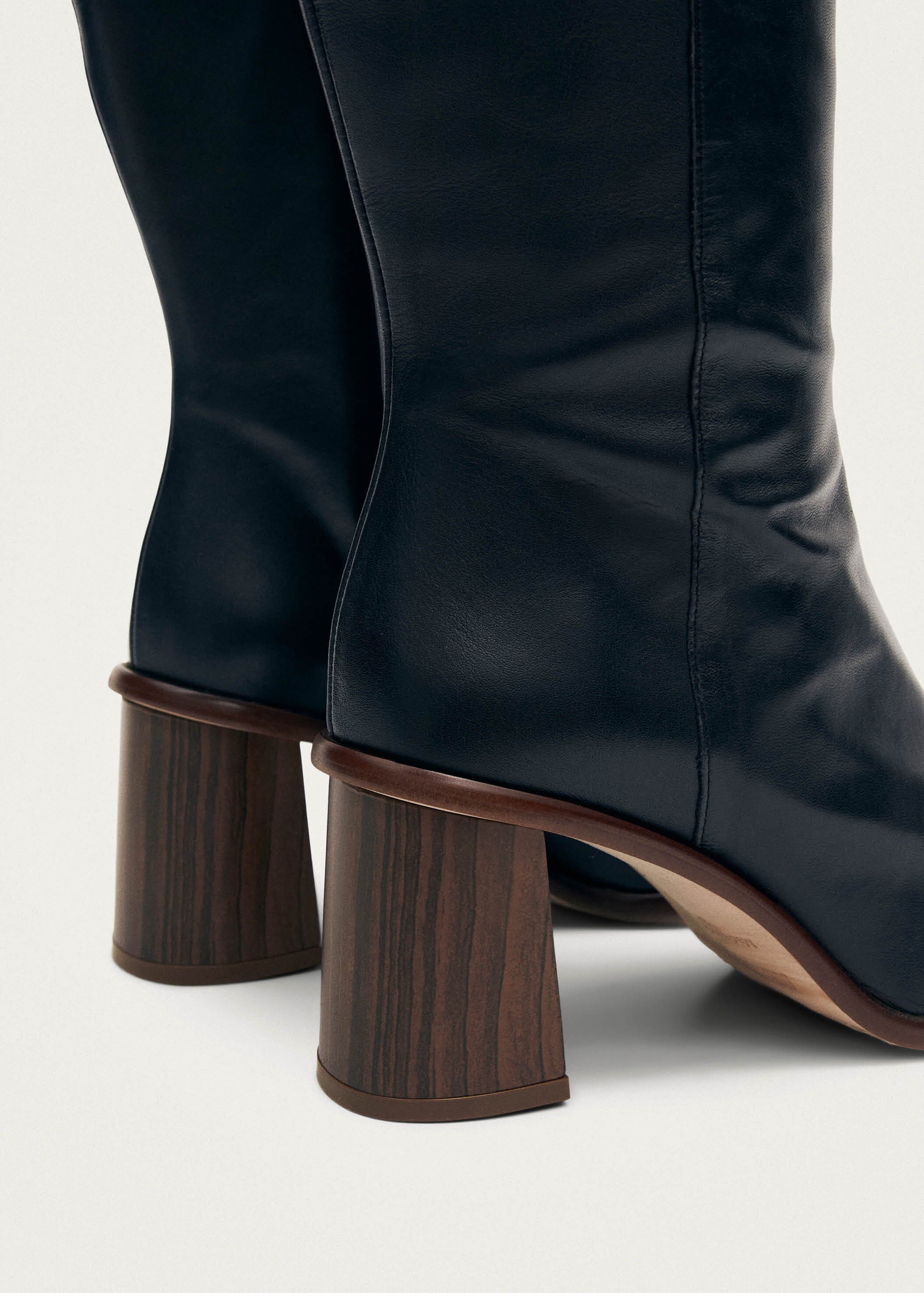
| ALOHAS East Black | Knee-high, square toe, side zip | $445 | 100% cow leather; brand-stated on-demand production | EU 35–44 | 36.0 cm (size 38) | 7 cm |
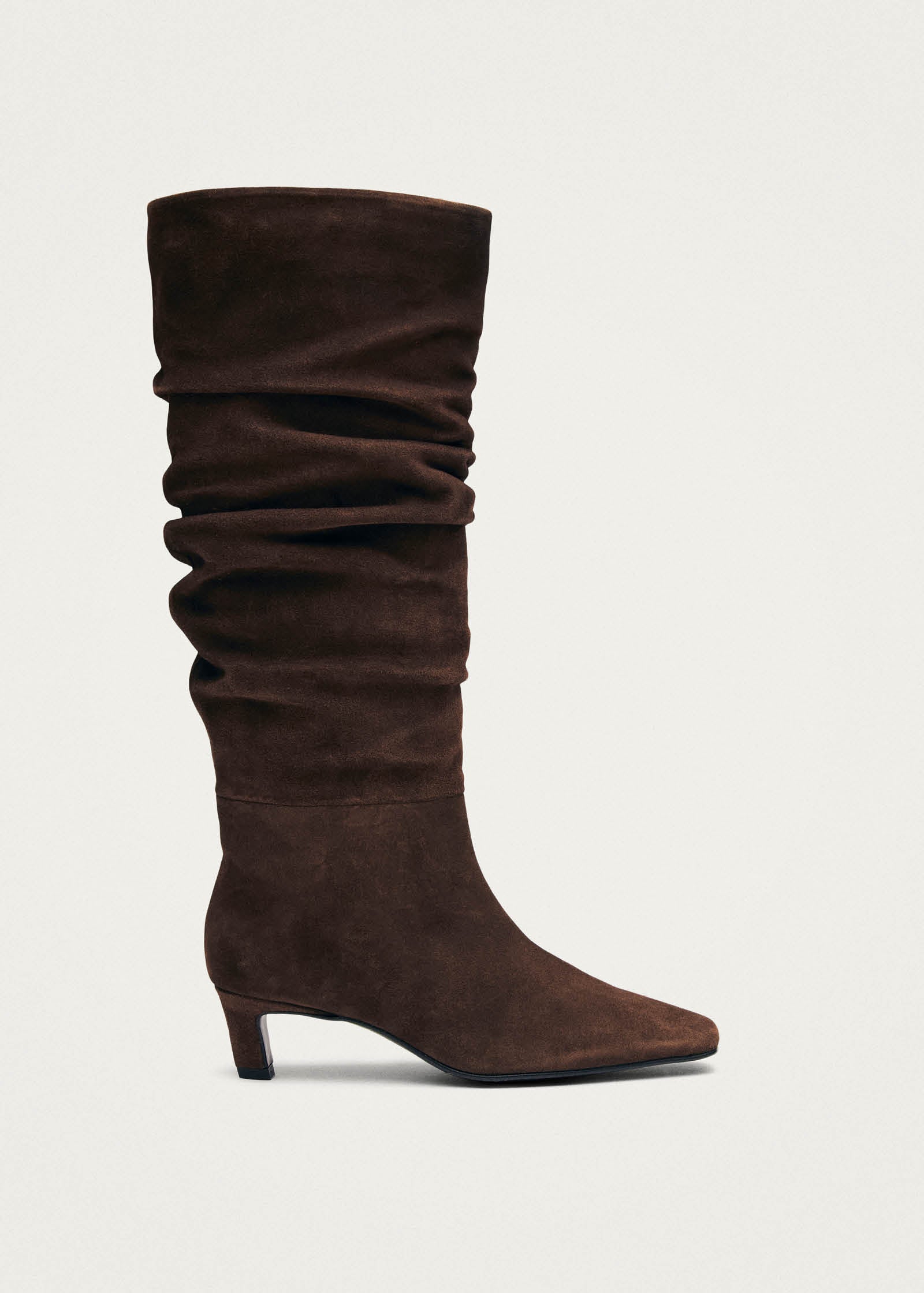
| ALOHAS Kalila Suede Brown | Knee-high, kitten heel, wrinkled shaft | $375 | 100% cow suede, leather lining; brand-stated on-demand production | EU 35–42 | 39.0 cm (size 38) | 5 cm |
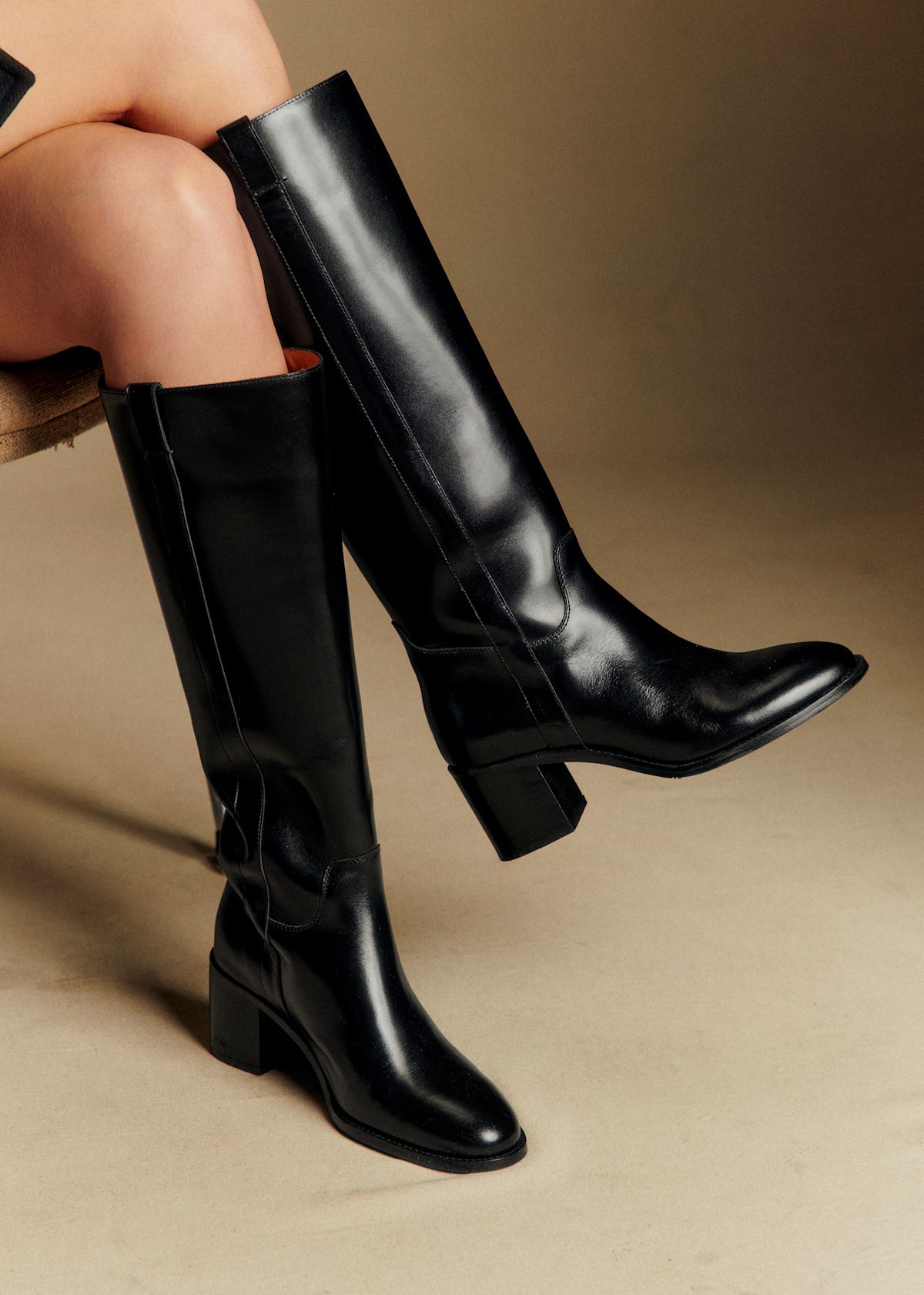
| Sézane Garrett | Classic riding / knee-high | $350 | EU production; brand-stated audited factories | US 4–11 | not published | not published |
How We Define “Sustainable” Here
“Sustainable” has no standardized definition in fashion, and pretending otherwise is the fastest way to lose a reader who pays attention. So here is our working standard, stated plainly.
We looked for at least one of: third-party certification of the tannery; brand-owned or audited manufacturing rather than anonymous contract work; volume controls such as made-to-order; and repairability — a boot where resoling is realistic rather than theoretical.
We are also not dodging the leather question. Vegan alternatives avoid animal inputs, but many are petroleum-derived synthetics with shorter lives, and a boot that fails in two seasons has its own footprint. Neither answer is clean. This guide covers leather because durability is where this band earns its money — not because the debate is settled.
And before the picks: buy secondhand first if you can. Knee-high boots turn over constantly on resale platforms, and a pre-owned pair of well-made boots beats a new pair on nearly every environmental measure. This costs us affiliate revenue to say. It remains the right advice, and it is the advice Conscious Life & Style leads with in its own guide.
What We Found — And What We Didn’t
One finding shaped this guide more than any other, so it belongs before the picks rather than buried after them.
The strongest sustainability evidence in this category does not currently sit inside this price band. The most rigorously credentialed knee-high boot we identified — Nisolo’s Vera Knee High, backed by actual Leather Working Group certification and a brand-owned factory in Peru — carries a $328 list price but was, at the time of writing, marked final sale at $159 with only a US size 5 remaining. Nisolo’s entire current boot range tops out at $228. It cannot serve this band.
That absence is the story. In the $315–$450 window you are largely buying brand-stated practice rather than independently certified practice. That is not nothing — production models and factory ownership are checkable structural facts. But it is weaker evidence than a certification an outside body renews, and you deserve to know which one you are getting.
Two of our three picks are also from the same brand, ALOHAS — disclosed rather than obscured. Very few brands both publish calf-circumference data and hold list prices inside this band. The two picks differ in heel height, calf width and material, so they serve genuinely different readers.
The Picks
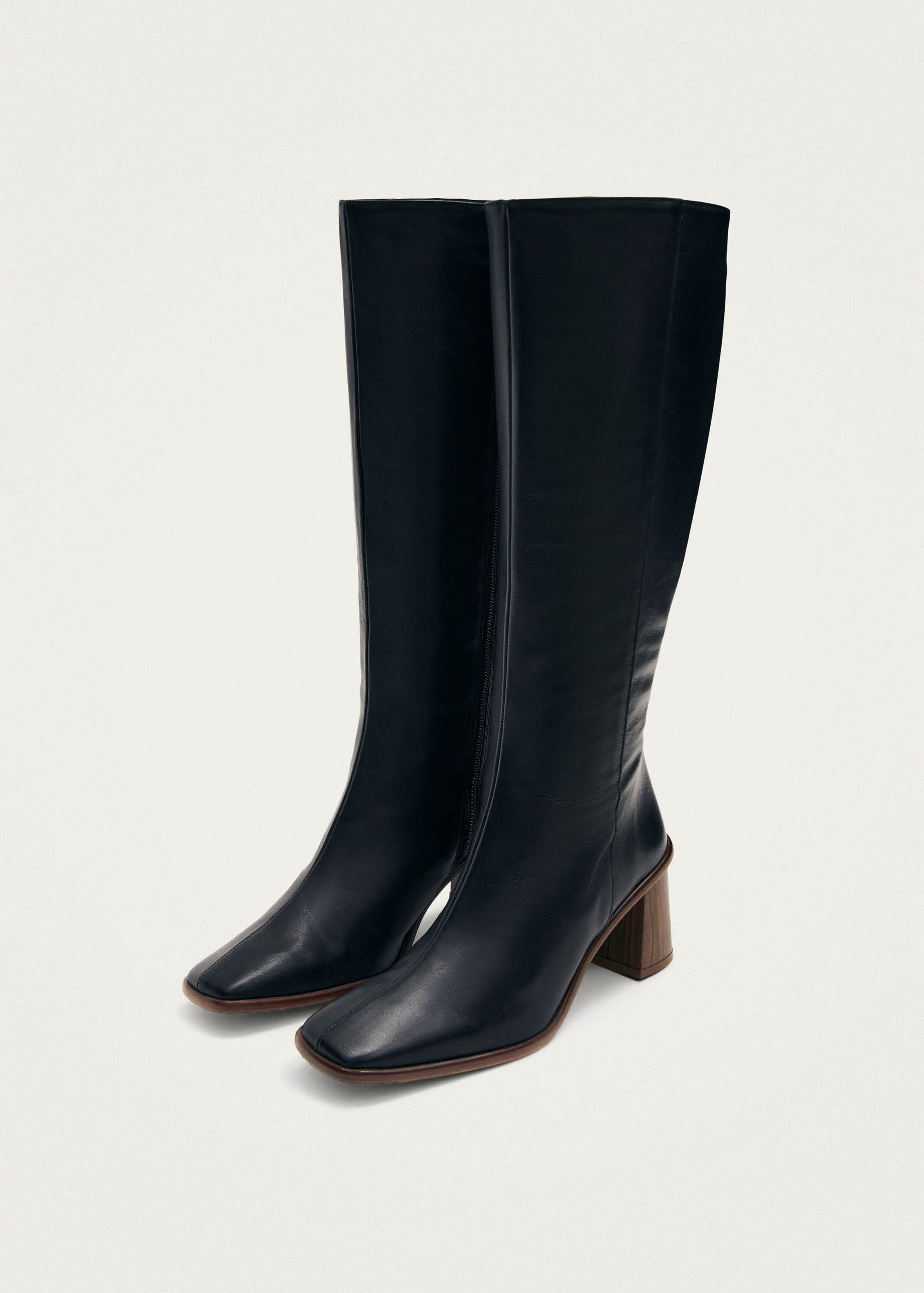
Best Overall Knee-High Under $450 — ALOHAS East Black Leather Boots, $445
Best for: the reader buying one black knee-high boot intended to last many seasons
Price: $445 | Sizes: EU 35–44 | Calf: 36.0 cm (size 38) | Heel: 7 cm
The East is the most conventional silhouette here and the one most likely to still look right in 2031: square toe, stable block heel, side zip, in black. ALOHAS publishes its composition without hedging — 100% cow leather upper, lining and insole, on a Cuerolite outsole.
The sustainability basis is the brand’s on-demand production model: ALOHAS states it manufactures against confirmed demand rather than forecasting and overproducing. Read that as brand-stated practice — ALOHAS labels its material “Sustainable Leather,” which is the brand’s own wording, not a third-party certification. The logic is sound; it simply is not externally audited the way an LWG mark is.
What holds up under scrutiny
- The size run is the deepest of the three picks at EU 35–44, and at the time of writing every size was showing as available — an improvement over earlier the same day, when several sat on waitlist.
- ALOHAS recurs across sustainable-boot coverage including The Good Trade’s roundups.
- The brand publishes exactly the fit data the rest of this category withholds.
Where to be careful
- The 7 cm heel is the tallest here — not the pick if you want an all-day walking boot.
- The 36.0 cm calf is medium. If you measure wider than that, skip to the Kalila.
- Because production is demand-driven, sizes move onto waitlist without warning; what is in stock this morning may be a lead time next week.
Shop the ALOHAS East at ALOHAS, $445 →
Best for Wider Calves & All-Day Wear — ALOHAS Kalila Suede Brown Leather Boots, $375
Best for: readers who have given up on knee-high boots because of calf fit, and anyone who needs to stay on their feet
Price: $375 | Sizes: EU 35–42 | Calf: 39.0 cm (size 38) | Heel: 5 cm
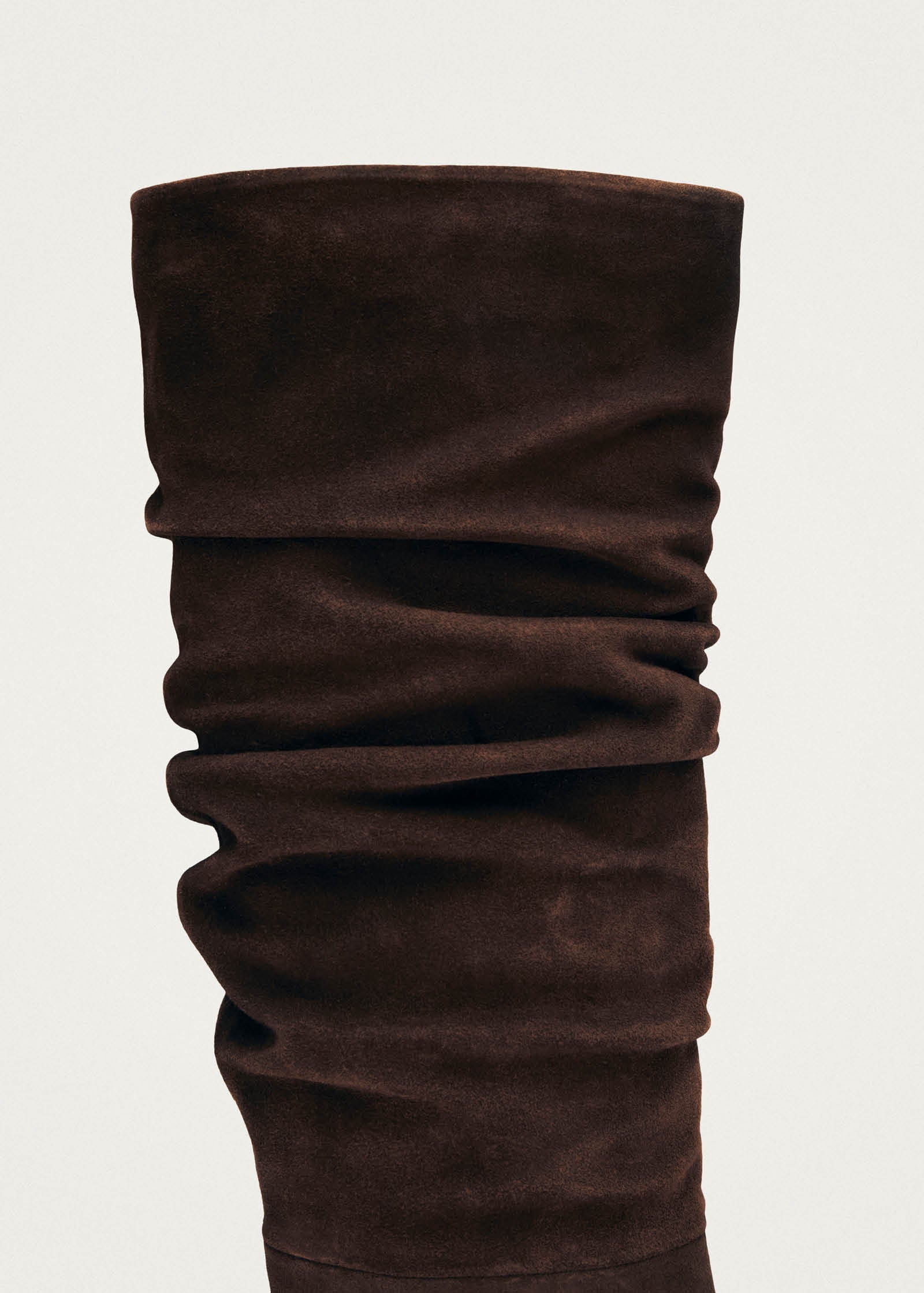
The Kalila solves the problem that ends most knee-high purchases before checkout. At 39.0 cm at size 38 it is three centimetres wider in the calf than the East — and calf circumference is the most common reason tall boots get returned. It pairs that with the lowest heel here, 5 cm, on a kitten-heel shape with a softly wrinkled shaft.
Construction is 100% cow suede over a cow leather lining and insole, again on a Cuerolite outsole, made in Spain per the brand’s published data. Same on-demand basis as the East, same caveat: brand-stated, not certified.
What holds up
- The most wearable boot here by a clear margin — widest calf, lowest heel, and $70 less than the East.
- Listed as ready to ship in six of eight sizes at the time of writing.
Where to be careful
- It is suede, and suede is genuinely worse in winter. Road salt and slush will mark it; it needs protector spray before first wear and periodic re-treatment.
- If you live somewhere with salted sidewalks from December through March, the East is the more honest recommendation despite costing more.
- Sizes 36 and 41 were unavailable at the time of writing.
Shop the ALOHAS Kalila at ALOHAS, $375 →
Best Classic Riding Boot — Sézane Garrett Boots, $350
Best for: the reader who wants a traditional riding silhouette rather than a current one
Price: $350 | Sizes: US 4–11 | Calf: not published | Heel: not published
The Garrett is the least trend-dependent shape here and the cheapest of the three. It is also where we have to be most upfront about the limits of what we can tell you.
Sézane manufactures predominantly within the EU and states that it uses audited facilities and recycled packaging; sustainability coverage has also credited it with partnering with LWG-certified ateliers, though we could not confirm that on Sézane’s own page for this boot. The strongest verifiable point in its favour is the size run: US 4–11, the widest of any pick here — and small and large sizes are exactly where this category usually fails.
Where to be careful — and this matters
- Sézane does not publish calf circumference, heel height, or leather composition for this boot on the pages we could access. We print not published rather than estimating, because a fabricated calf measurement is worse than no measurement.
- Sézane’s site is heavily client-rendered and was not reliably loadable at the time of our final checks, so confirm the current price and size availability yourself before buying — our $350 figure was verified earlier the same day, July 22, 2026.
- European sizing runs its own way, and popular sizes in this brand sell through early in the season.
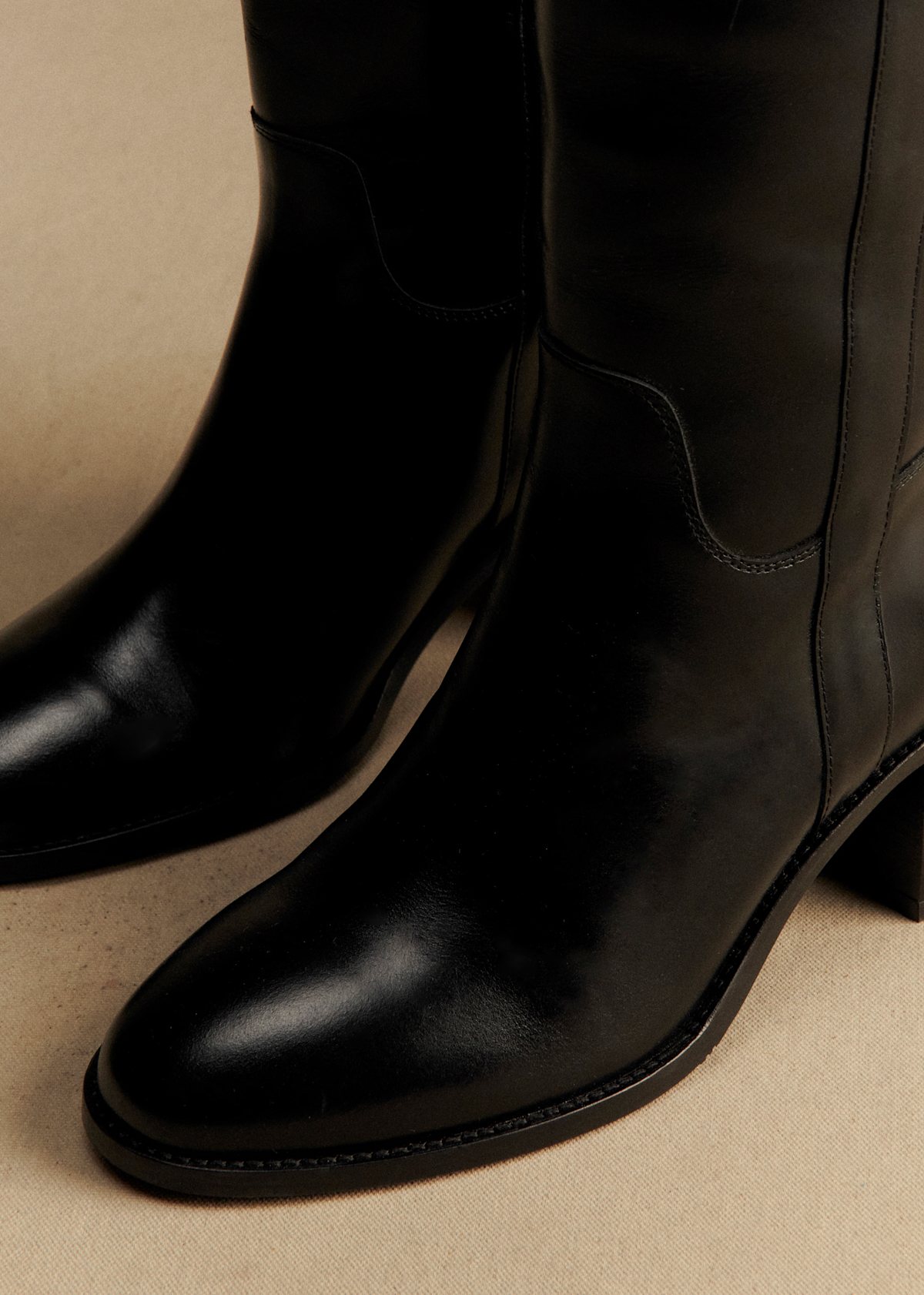
Shop the Sézane Garrett at Sézane, $350 →
The Certification Benchmark (Not a Formal Pick)
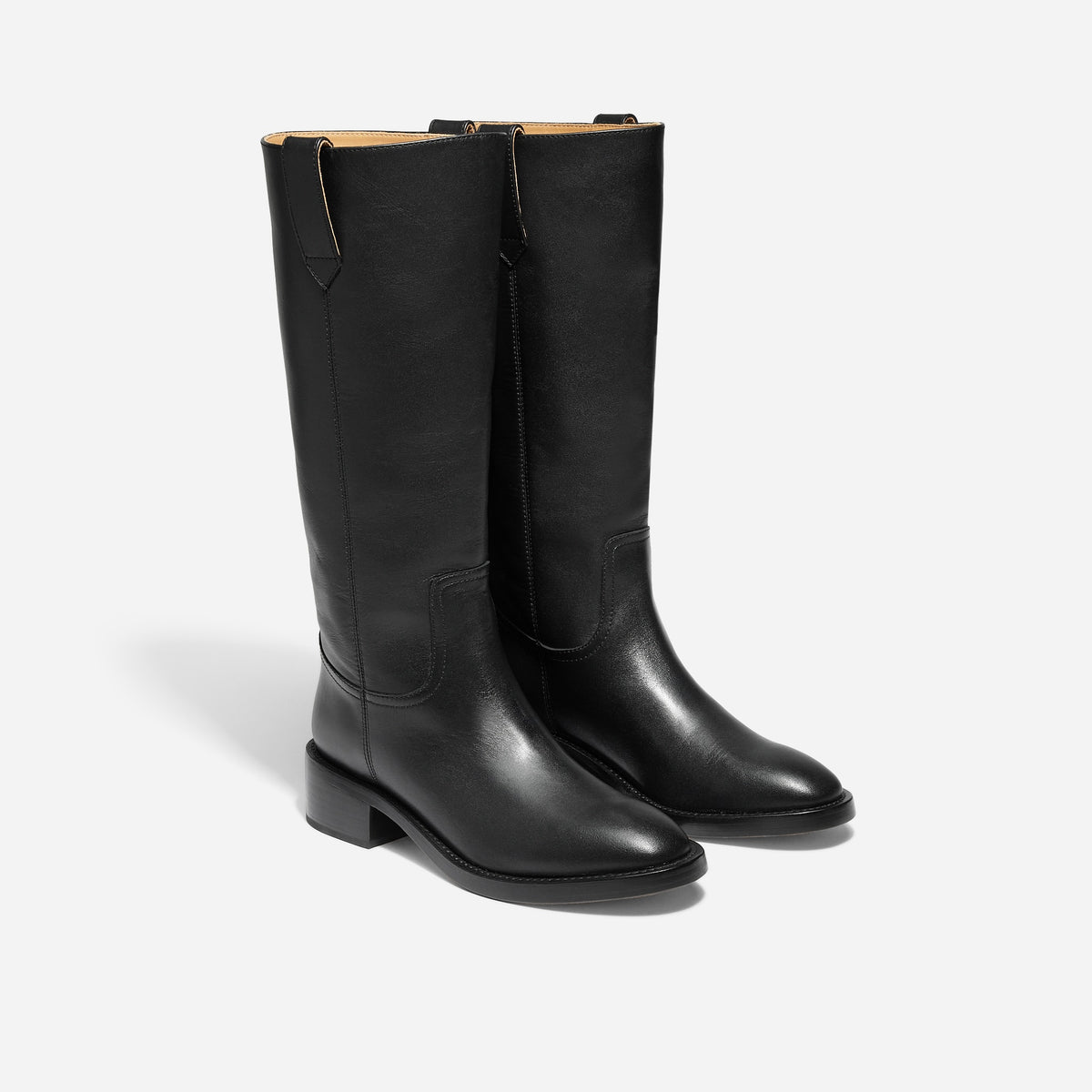
Nisolo Vera Knee High Boot — $328 list / $159 final sale
We name this boot even though it cannot be a pick, because it is the reference point the rest of the category should be measured against.
Nisolo holds Leather Working Group certification, operates its own factory in Peru rather than contracting anonymously, sources leather as a meat-industry byproduct, and publishes wage commitments for the people who make its shoes. That is a materially stronger evidentiary basis than anything else in this guide.
It is also, at the time of writing, effectively gone: final sale at $159 against a $328 list, with only a US size 5 left and every larger size unavailable. Final sale typically means non-returnable. If you wear a US 5, it is the best value in this category. For everyone else, Nisolo’s Eva Everyday Chelsea Boot at $228 is the closest in-stock alternative — an ankle silhouette below our band, offered here as a route to the same certification standard, not as a substitute knee-high.
Check Nisolo Vera stock at Nisolo, $159 final sale →
Cost Per Wear: The Arithmetic Nobody Runs
Every sustainable-boot guide asserts durability. None of the five we reviewed does the math. It is simple, so here it is.
Assume a boot worn three times a week through a US fall-and-winter season — roughly 26 weeks, so about 78 wears per season.
| Boot | Price | Cost/wear, 1 season | 3 seasons | 5 seasons |
|---|---|---|---|---|
| ALOHAS East | $445 | $5.71 | $1.90 | $1.14 |
| ALOHAS Kalila | $375 | $4.81 | $1.60 | $0.96 |
| Sézane Garrett | $350 | $4.49 | $1.50 | $0.90 |
A $150 fast-fashion boot lasting one season costs $1.92 per wear — more than any of these three at five seasons. That is the financial case for this band, and it holds only if the boot survives five seasons, which depends far more on care and resoling than on purchase price.
Plan for that part: all three picks use constructions a competent cobbler can work with. Resoling costs vary by region, so get a local quote rather than assuming — but a boot you can resole twice has a ten-year life, and that is what turns an ethical argument into a financial one.
How to Choose
- Measure your calf first. Measure the widest point over the socks you will actually wear and add roughly 2 cm of ease, then compare against 36.0 cm (East) or 39.0 cm (Kalila). This one step prevents most tall-boot returns.
- Match the heel to your real week. A 7 cm heel and a commute involving actual walking are not compatible for most people. The 5 cm Kalila is the realistic daily option.
- Be honest about your climate. Suede in a salted-sidewalk city is a maintenance commitment. Choose the smooth leather if you will not keep up with protector spray.
- Weigh the evidence, not the adjective. If third-party certification is what you care about, this band mostly cannot offer it right now — consider waiting for a Nisolo restock, or buying secondhand.
- Budget for care, not just purchase. Protector spray, a cedar boot shape, and an eventual resole are what make the cost-per-wear math above real rather than aspirational.
Frequently Asked Questions
Is leather or vegan leather actually more sustainable?
Neither wins outright. Most vegan leathers sold today are polyurethane or PVC — petroleum-derived and typically shorter-lived than quality leather. Leather carries the impacts of animal agriculture and tanning, which is why LWG certification of the tannery matters. The defensible framing: a repairable boot worn for a decade generally outperforms a synthetic pair replaced every two or three years.
What does LWG certified leather mean?
The Leather Working Group audits and rates tanneries on environmental performance — water and energy use, chemical management, waste handling, and traceability of hides. It certifies the tannery, not the finished boot, and it does not assess animal welfare or the labour conditions in the factory that assembles the shoe. It is meaningful and externally verified, and it is also narrower than most marketing implies.
Can leather boots be resoled?
Usually, if the construction allows it — and this is the biggest lever on lifetime cost. Bring the boot in before the outsole wears through to the midsole; damage past that point gets expensive or terminal. Costs vary by region, so ask a local cobbler rather than trusting a national average.
What calf circumference do knee-high boots fit?
It varies far more than shoe size does, which is why publishing the number matters. Here: the ALOHAS East measures 36.0 cm and the Kalila 39.0 cm, both at size 38. Sézane does not publish it. Measure your widest point and allow roughly 2 cm of ease.
Are pre-order shoe brands actually more sustainable?
The logic is sound: producing against confirmed orders reduces the overproduction and markdown cycle behind much footwear waste. The caveat is that this is brand-stated rather than audited — you are trusting the brand’s account of its own operations. Treat it as a meaningful structural signal, not verified fact, and note it costs you immediacy: waitlisted sizes can mean weeks of lead time.
Editor’s Recap
For one durable black knee-high, the ALOHAS East at $445 is the pick — deepest size run, most classic shape, published fit data. If calf width has been your obstacle, the ALOHAS Kalila at $375 is wider at 39.0 cm and lower at 5 cm, with a suede-care commitment attached. For a timeless riding silhouette and the broadest US size range, the Sézane Garrett at $350 delivers — provided you accept unpublished fit specs and verify pricing yourself.
And the finding worth carrying away, for a shopper who can spot performative sustainability marketing: in the $315–$450 band you are mostly buying brand-stated practice, not third-party certification. The genuinely certified option — Nisolo — sits below this band and is nearly sold out. Buying secondhand remains the strongest environmental choice available to you.
Related Guides
- Best Leather Fisherman Sandals Under $150 for Sustainability-Minded Women
- Best Suede Bags Under $500 to Buy Before Fall 2026 — useful if the Kalila has you thinking about suede care
- Best Chunky Gold Hoop Earrings Under $200 (Recycled-Gold Picks)
This is an editorial research roundup compiled from published sources and brand specifications. We do not personally test every product we write about, and we say so rather than implying otherwise. Prices, stock, and specifications were verified on July 22, 2026 and change frequently — confirm on the brand’s site before purchasing. This page contains affiliate links; BestUnderPick may earn a commission at no additional cost to you.