Best Wool Coats Under $300 for Sustainability-Minded Women in Fall 2026 (Fiber-Content & Cost-Per-Wear Checked, With Honest Cons)
Editorial Research Roundup — Compiled from secondary sources, not personal hands-on testing. This guide synthesizes brand product-page disclosures (fiber content, mill sourcing, care terms), verified retailer reviews, and coverage from outlets like Who What Wear, WWD, and PureWow, alongside reader consensus in communities such as r/femalefashionadvice and r/frugalfemalefashion. We have not personally worn every coat through a winter. Where the consensus is strong we present it plainly; where opinions split we say so. As an affiliate for the brands and retailers below, BestUnderPick may earn a commission on qualifying purchases at no extra cost to you.
Here is the truth almost no coat roundup will print: a genuinely good wool coat under $300 is almost always either about $180 or a little over $300 — the flattering middle where a lot of “sale” pricing pretends to live barely exists. And here is the second thing they skip: the words “wool blend” on a tag can mean 70 percent wool or it can mean 25 percent, and that single number decides whether your coat survives three winters or pills apart after one. Late August into September is peak coat-shopping season, which means if you want to buy well this year rather than replace a sad coat next year, the fiber-content homework is happening this week.
This roundup is built for exactly one reader: a sustainability-minded shopper with a roughly $300 ceiling who wants a coat that lasts, not a green sticker that doesn’t. At this price the honest version of “sustainable” is less about a conscious-collection label and more about four decisive things — a high natural-fiber percentage so the coat endures, genuinely recycled content where it actually exists, cost-per-wear across many winters, and the fact that the greenest coat is often the secondhand one or the one already hanging in your closet. We will be blunt about the catch on every pick.
TL;DR top pick: the Mango Manteco Wool Coat with Belt ($299.99 list) is the best all-around in-band buy here — a classic belted silhouette in fabric woven by a respected Italian mill, with the honest caveat that its list price routinely falls to around $180, so timing the sale matters more than the tag. If you want the longest-wearing neutral, jump to the Mango Handmade Wool Coat in camel ($249.99).
In This Article
- How this guide was compiled
- Quick comparison table (fiber content and honest catch at a glance)
- The best wool coats under $300 for a sustainability-minded shopper
- The genuinely recycled option worth a restock alert
- How to shop a sustainable wool coat under $300
- FAQ: wool percentages, blends, pilling, and the greenest route
- Editor’s pick recap
How This Guide Was Compiled
Because we did not personally wear-test these coats through a season, the method matters more than any single verdict. Four steps went into the shortlist.
Community aggregation. We reviewed recurring advice in wool-coat threads on r/femalefashionadvice and r/frugalfemalefashion, where the same hard-won rules surface every fall: check the wool percentage before anything else, never pay full price for a Mango coat because they discount constantly, double-faced wool needs no lining and looks cleaner, and secondhand is where the real 100-percent-wool bargains hide. Those themes map directly onto the honest cons below.
Expert coverage compile. We cross-read affordable-coat and best-wool-coat guidance from Who What Wear’s under-$300 edit, WWD’s 2026 wool-coat guide, and PureWow’s multi-editor test of Quince’s winter coats. The through-line: breadth and price transparency are easy to find, but fiber-content honesty, warmth guidance, and a real sustainability lens are almost always missing.
Verified retailer review sampling. For the direct-to-consumer picks, we read each brand’s published reviews and product disclosures for fit, warmth, and durability signals, and noted where sizing runs relaxed or where a style reads softer than a structured coat.
Brand and retailer cross-check. Every price, fiber percentage, mill note, and care term below was pulled from the brand or retailer product page as of late August 2026. Fast-fashion and seasonal outerwear pricing moves quickly, so several prices are flagged to reconfirm at checkout — and one genuinely recycled standout was sold out at our check.
One caveat, stated once here and once at the end: this is an editorial research roundup, not a lab test or a personal wear diary. Where reviewers and specs disagree, we surface the disagreement instead of smoothing it over.
Quick Comparison: Wool Coats Under $300 at a Glance
| Coat | Brand | Price | In-band? | Fiber content | Recycled? | Honest catch |
|---|---|---|---|---|---|---|
| Manteco Wool Coat with Belt | Mango | $299.99 | Yes (~100%) | Virgin wool (Manteco mill) | No | Virgin, not recycled; list drops to ~$180 |
| Handmade Wool Coat (Camel) | Mango | $249.99 | Yes (~83%) | Wool blend (check %) | No | Softer/less tailored; dry-clean; shows lint |
| Wool-Cashmere Single-Breasted | Quince | $200 | Below floor | Wool-cashmere blend | GRS-certified factory | DTC-only, no try-on; verify % on spec tab |
| Nob Hill Wool Wrap Coat | Pendleton | $425 | Over cap | 70% wool / 20% nylon / 10% cashmere | No | Over budget; Imported, not U.S.-milled |
| Italian ReWool Cocoon Coat | Everlane | $348 (often ~$174) | Over/sale | 52% recycled wool | Yes (genuine) | Currently sold out; reads boxy/light |
Prices verified on brand/retailer pages as of late August 2026. Fast-fashion and seasonal outerwear pricing shifts, so confirm at checkout. “In-band” means our $210–$300 target; picks below or above are labeled and justified.
The Best Wool Coats Under $300 for a Sustainability-Minded Shopper
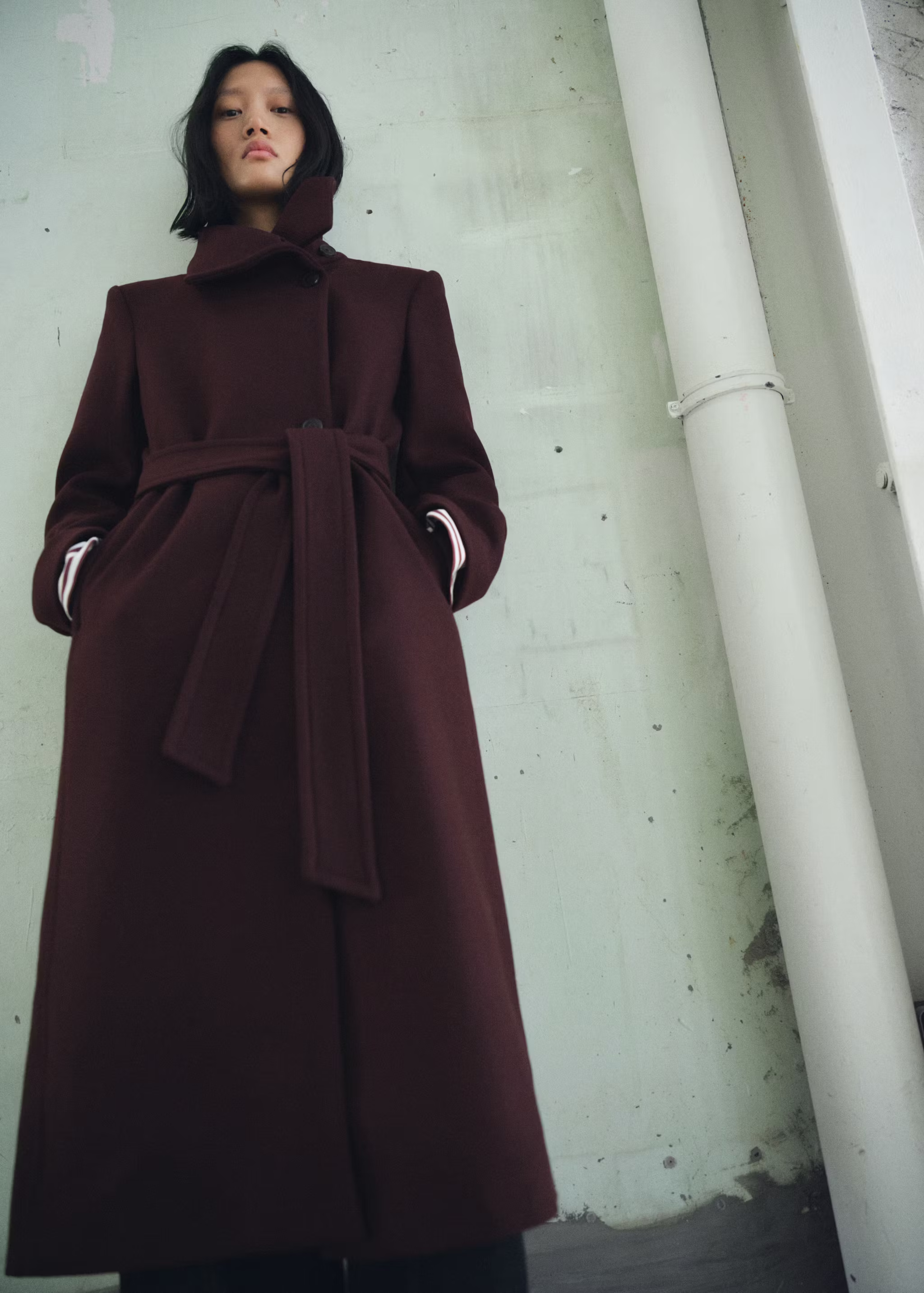
Top Pick (Best In-Band, Respected-Mill Fabric): Mango Manteco Wool Coat with Belt — $299.99
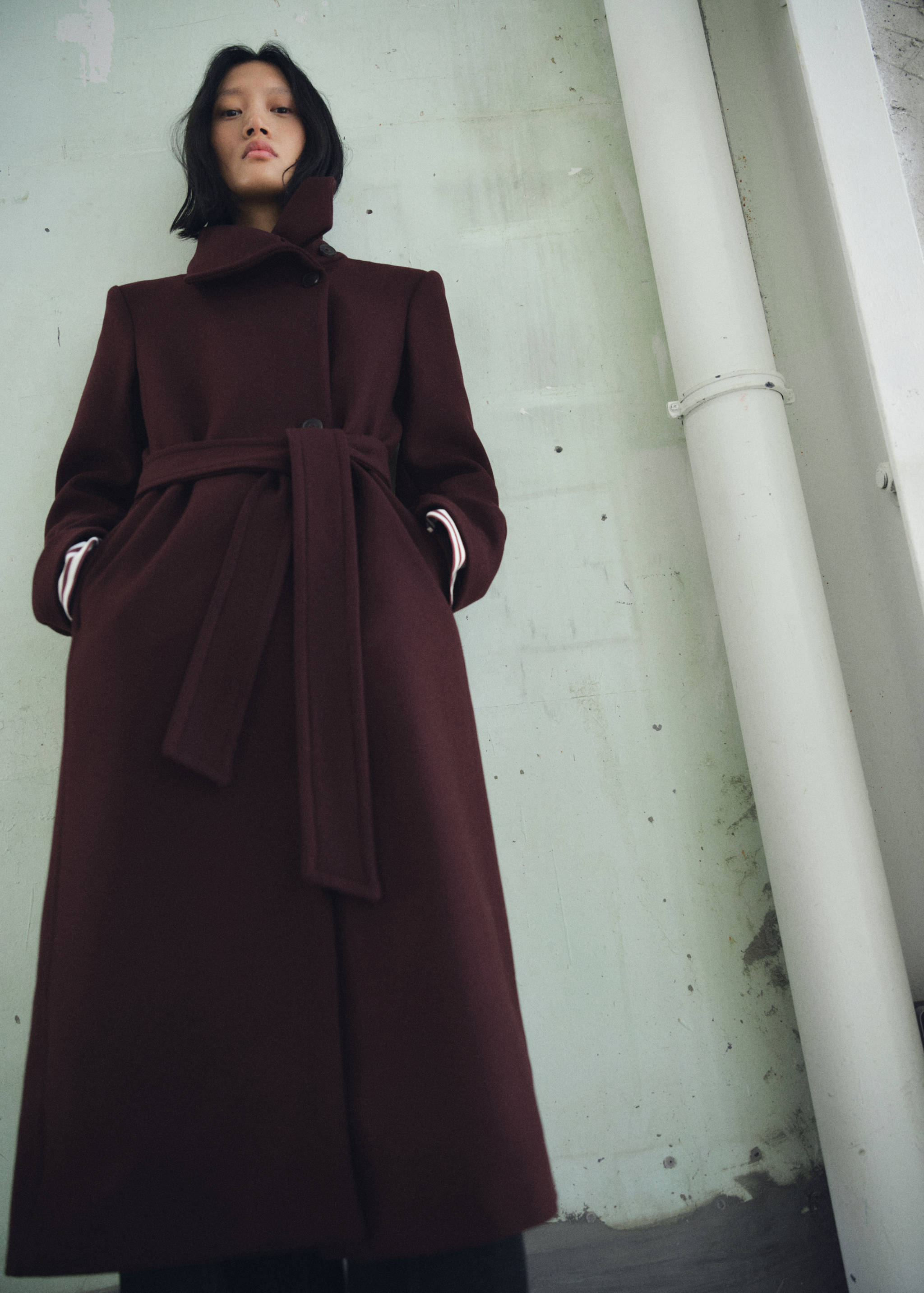
Quick stats: $299.99 list · Mango · virgin wool fabric woven by Manteco (Italian mill), funnel neck, robe-style belt, lined.
The Manteco coat takes the top slot because it does the two things a sustainability-minded buyer actually wants at this price. First, the fabric has a real traceability story: Manteco is one of the most respected mills in responsible wool, best known for its recycled and regenerated wool programs, so a coat woven from its cloth carries a legitimate sourcing signal rather than a vague “conscious” label. Second, the belted, long, straight silhouette is a genuine cost-per-wear classic — the kind of shape you re-wear for a decade rather than a trend you retire in a year. Per Mango’s product page, plus sizes are available and the coat is fully lined.
What reviewers and specs favor: the tailored classic cut reads far above its price on camera, and the Manteco fabric sourcing is a rare traceability point in the sub-$300 field (per Mango’s product disclosures and r/femalefashionadvice consensus that mill-sourced fabric outlasts generic blends).
Recurring complaints: two honest catches. This specific style is virgin wool, not recycled — do not assume “Manteco” automatically means the recycled MWool the mill is famous for. And Mango is fast fashion: construction is good, not heirloom. The bigger money catch is that the $299.99 list routinely falls to around $180, so paying full price is effectively overpaying; the sustainable-shopper move is to wait for or catch the markdown. Some colors and sizes sell out (the maroon was gone at our check; black and brown remained).
Best fit for: the shopper who wants one traceable, tailored, all-season coat and is willing to time the sale rather than buy at list.
Mango Manteco Wool Coat with Belt →
Best Everyday Camel (Highest Cost-Per-Wear): Mango Handmade Wool Coat — $249.99
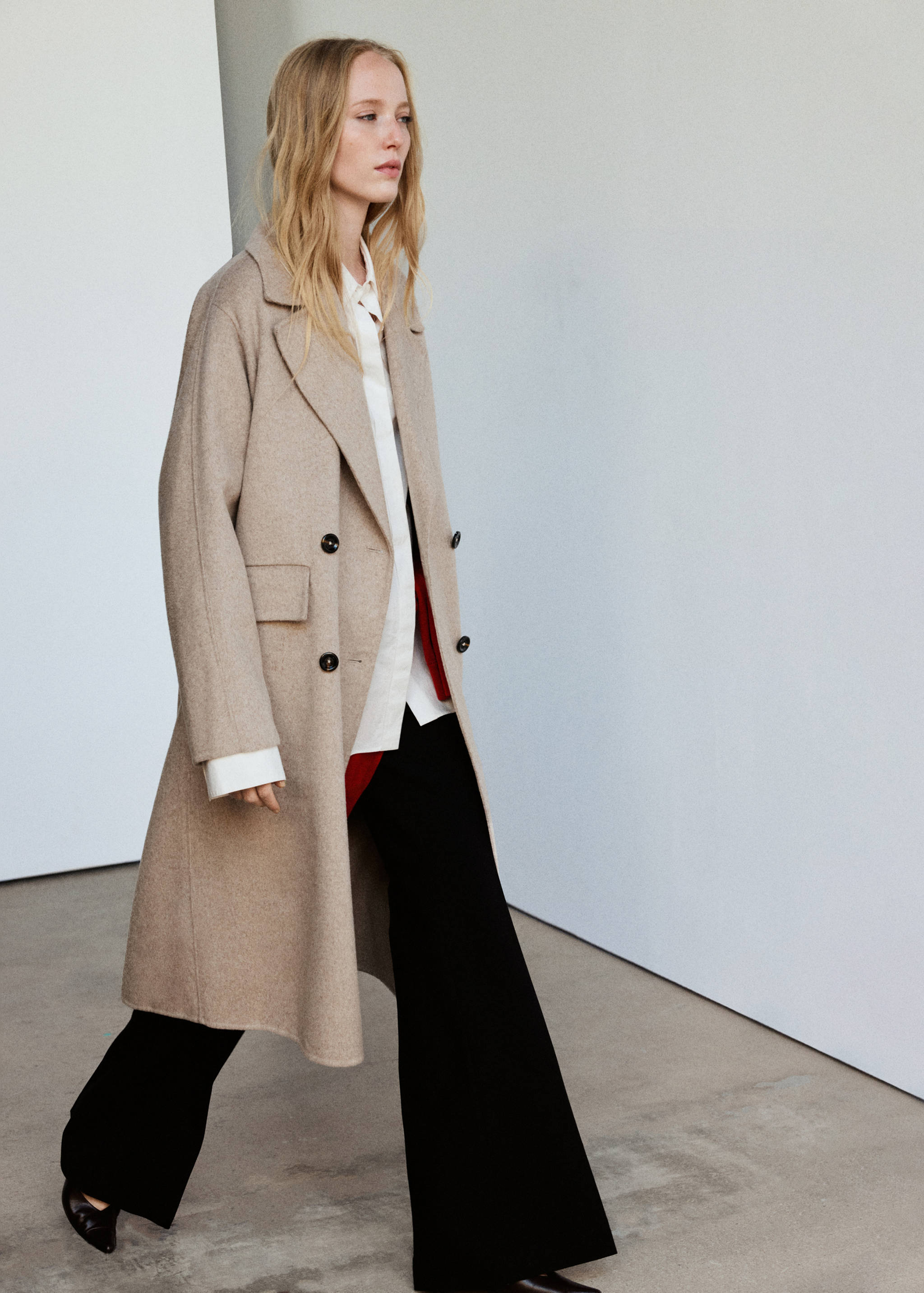
Quick stats: $249.99 · Mango · handmade wool-blend longline coat, minimal-seam construction, lined; camel, black, grey, chocolate.
If cost-per-wear is the metric that matters most for a sustainability-minded buyer — and it should be — a true camel coat is the strongest play in this roundup. A neutral camel goes with nearly everything, which means fewer coats bought over a lifetime, which is the whole point. At $249.99 it sits comfortably in band, and the longline cut reads polished for both work and weekend.
What reviewers and specs favor: the neutral camel maximizes outfit versatility (the practical definition of buy-once), and the minimal-seam “handmade” construction gives a soft, clean drape (per Mango’s product page and the r/femalefashionadvice preference for neutral coats as long-term wardrobe anchors).
Recurring complaints: “handmade” here means fewer structured seams, so it reads softer and less crisply tailored than a fully canvassed coat — a feature if you like a relaxed line, a drawback if you want sharp structure. It is a wool blend, not 100 percent wool, so confirm the exact percentage on the spec tab before buying. It is dry-clean only, and camel shows lint and pet hair, so budget for a clothes brush.
Best fit for: the shopper prioritizing a decade-long neutral over trend, who is fine with a softer silhouette and diligent about lint.
Best Value (Below Floor, Labeled): Quince Wool-Cashmere Classic Single-Breasted Coat — $200
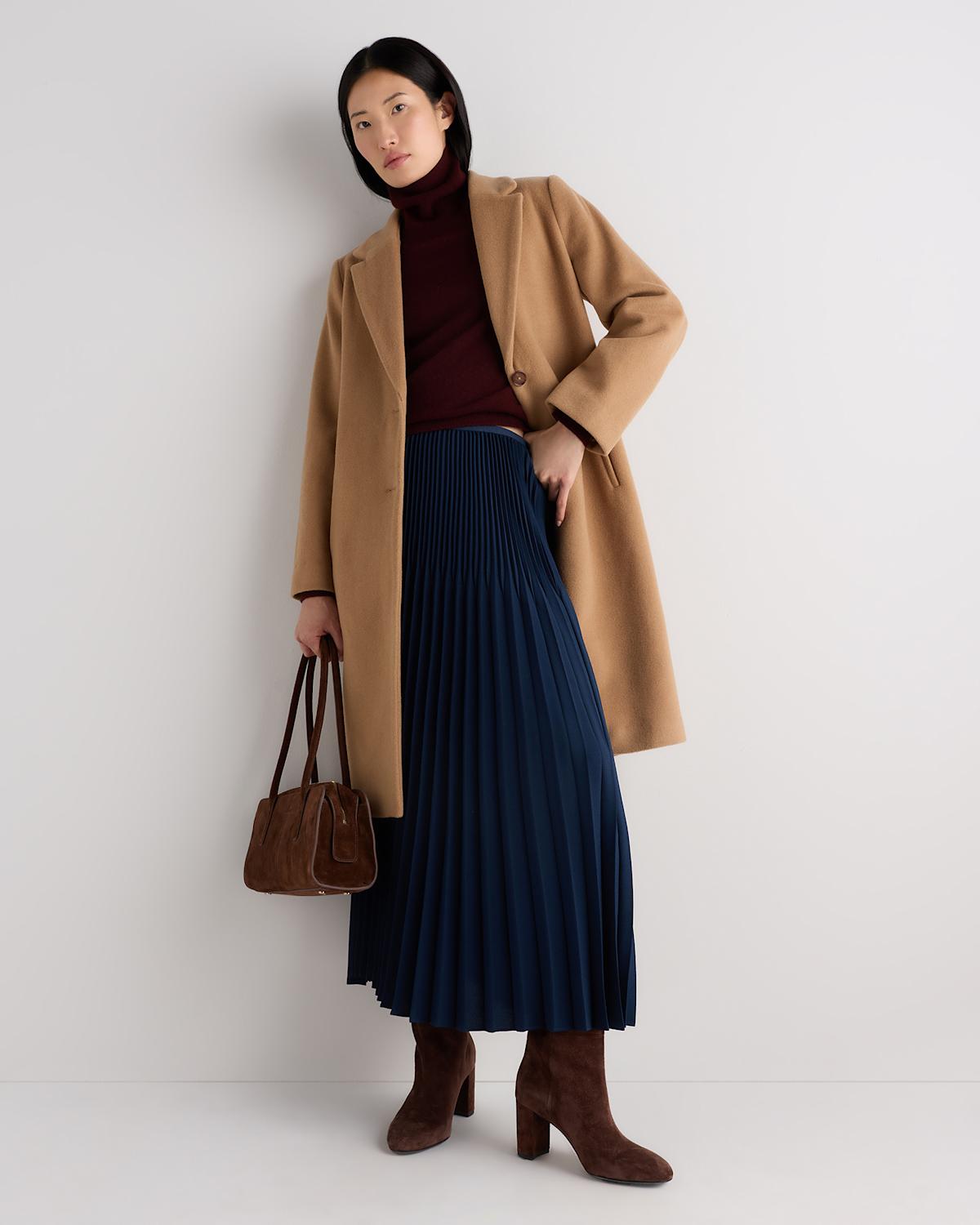
Quick stats: $200 · Quince · wool-cashmere blend, single-breasted, notched lapel, made in a GRS-certified factory.
We label this “below floor” because at $200 it sits $10 under our $210 in-band target — but it earns the spot as the clearest “responsible on a budget” story here. Per Quince, the coat is made in a Global Recycled Standard (GRS)-certified factory that runs on solar power with wastewater treatment, and the mill-direct pricing model is what puts a wool-cashmere blend at $200. Quince rates its wool coats for roughly 20–45°F with a mid-layer. There is also a pure-wool sibling — the Quince Italian Wool Classic Single-Breasted Coat at $179, in Italian Melton wool rated to colder temperatures — if you want maximum wool percentage for the money.
What reviewers and specs favor: mill-direct pricing plus a certified factory plus a natural-fiber blend is the most legible sustainability-on-a-budget combination in this guide, and cost-per-wear on a $200 classic coat is excellent if it lasts (per Quince disclosures and PureWow’s editor test of Quince winter coats).
Recurring complaints: it is DTC-only, so there is no try-on, and sizing runs relaxed — order with that in mind. Quince’s very fast catalog expansion and “mill-direct luxury” marketing draw scrutiny, so verify the exact fiber percentage on the spec tab before you buy, since blends vary by style. The single-button minimal closure seals out wind less than a double-breasted coat, and cashmere content pills where it rubs against bag straps and seatbelts.
Best fit for: the value-first shopper who wants a certified-factory natural-fiber coat and is comfortable buying online without a fitting room.
Quince Wool-Cashmere Classic Single-Breasted Coat →
Buy-It-For-Life (Over-Cap Reference, Labeled): Pendleton Nob Hill Wool Wrap Coat — $425

Quick stats: $425 · Pendleton · 70% wool / 20% nylon / 10% cashmere, polyester lining, double-breasted wrap, fully lined, Imported.
This one is over our $300 cap, and we are including it honestly as a reference rather than a core pick — because a guide about lasting coats owes you a look at what “if you can stretch” actually buys. The Nob Hill has the softest hand of the group thanks to its cashmere content and the most forever-coat construction, a useful counterweight for a reader weighing a fast-fashion in-band coat against one built to outlast several.
What reviewers and specs favor: heritage-brand construction, a long double-breasted wrap that seals out wind, and the softest touch in the roundup (per Pendleton’s product disclosures).
Recurring complaints: beyond the obvious budget miss at $425, there is a heritage catch worth stating plainly: despite Pendleton’s fame for its Oregon and Washougal mills, the Nob Hill is Imported — it is not woven at their U.S. mills, so the American-heritage halo is only partial here. The 20 percent nylon is what holds the price below a 100-percent-wool Pendleton (the pure-wool Timberline runs $675), and it is dry-clean only.
Best fit for: the reader who would rather stretch once for a longer-lasting coat than replace an in-band coat sooner — with eyes open about the Imported label.
Pendleton Nob Hill Wool Wrap Coat →
The Genuinely Recycled Option Worth a Restock Alert
Most coats under $300 are virgin wool blends, and that is fine — but if genuinely recycled content is your priority, one option stands apart and deserves a callout even though it does not get a hero slot right now.

The Everlane Italian ReWool Cocoon Coat is the strongest true-recycled buy in this category. Per Everlane, it is 52% recycled wool, 43% recycled polyester, and 5% other, with a recycled-polyester lining, recycled trims, and GRS certification; Everlane states recycled wool cuts raw-material carbon by roughly 90 percent versus virgin. It lists at $348 (over our band) but frequently drops around 50 percent to about $174 — which would make it the best genuine-recycled value here. The catches: it was sold out at our check, reviewers describe it as boxy and lighter than expected (some say it reads unlined and wrinkles easily), and the discounted color has been final-sale. When it restocks on sale near $174, set a restock alert rather than paying full list.
A Few More In-Band Names Worth Knowing
Because Mango dominates the honest in-band picks, here are more coats to widen the field, cited to Who What Wear’s under-$300 edit and each brand’s spec tab: the Aritzia The New Stedman Coat ($298), a tailored virgin-wool option; the COS Double-Faced Wool Pea Coat ($275), where double-faced wool needs no lining and gives clean edges; the Gap Belted Double-Faced Wool Scarf Coat ($298) for the on-trend scarf collar; and the Zara ZW Collection Long Wool Coat ($229), which carries a higher wool percentage than Zara’s cheaper coats — so check the tag. Slightly over band but often on sale near $277 is the J.Crew Long Toscana Coat in Italian stadium-cloth wool blend ($398 list).
One category-wide honesty note: the single most sustainable move here is usually secondhand 100-percent wool — ThredUp and The RealReal routinely list real wool coats well under $300 — or simply the coat already in your closet. New or used, the metric that decides everything is natural-fiber percentage plus construction, which together equal years of wear. A label does not.
How to Shop a Sustainable Wool Coat Under $300
Read the fiber percentage first — it is the whole game. A $299 coat that is 70 percent wool with 30 percent poly will outlast a $180 “wool-blend” that is 30 percent wool, every time. Before you look at the silhouette, find the composition on the spec tab. If a coat markets itself as sustainable but the tag reads majority acrylic or polyester, treat it as a greenwashing flag and move on.
Separate list price from pay price. In this category the tag is often theater. Mango’s coats in particular list high and discount constantly, so buying at full price is overpaying — the greener and cheaper move is to time the markdown. Recycled standouts like the Everlane ReWool swing from $348 to about $174 on sale, which is when they actually make sense.
Do the cost-per-wear math. A $250 camel coat you wear 100 days a year for eight winters costs pennies a wear; a $120 novelty coat you retire after one season does not. Neutral colors, classic cuts, and higher wool content all push cost-per-wear down — which is the real budget-sustainability overlap.
Remember the greenest coat may not be new at all. Secondhand 100-percent wool from resale platforms, or the perfectly good coat already in your closet, beats almost any new purchase on both carbon and cost. If you do buy new, buy the one you will keep longest.
FAQ
What percentage of wool should a good wool coat have? Aim as high as your budget allows, and never buy blind. The higher the wool content, the warmer the coat and the better it resists pilling — a majority-wool coat (roughly 70 percent or more) will generally outlast a “wool-blend” that is only 25–30 percent wool. Always confirm the exact figure on the spec tab, because “wool blend” is a marketing phrase, not a standard.
Are wool-blend coats worth it, or should I buy 100% wool? Blends can be worth it — a well-made 70/30 wool-nylon coat is durable and affordable, and a touch of cashmere adds softness. The problem is low-wool blends: below about 30 percent wool, warmth drops and pilling rises. The percentage matters more than the “blend vs. pure” label; a high-wool blend beats a thin, cheap “100% wool” coat.
Is a recycled wool coat as warm as a virgin wool coat? For everyday wear, a well-constructed recycled-wool coat performs comparably — recycled wool keeps the fiber’s core insulating properties. The bigger warmth variables are total wool percentage, fabric weight, and whether it is lined, not whether the wool is recycled. Recycled options like Everlane’s ReWool also carry a meaningfully lower raw-material carbon footprint, per the brand.
What is the most sustainable way to buy a winter coat on a budget? Buy secondhand 100-percent wool, or keep wearing the coat you already own. Resale platforms such as ThredUp and The RealReal frequently list real wool coats under $300, and nothing beats extending the life of a coat that already exists. If you buy new, choose the highest natural-fiber percentage in a classic cut so it lasts — longevity is the sustainability metric that actually counts.
How do I keep a wool coat from pilling? Pilling happens where fabric rubs — bag straps, seatbelts, underarms — and cashmere blends are especially prone to it. Rotate the coat rather than wearing it daily, keep friction points clear, and use a fabric shaver or wool comb to remove pills gently rather than pulling them. Store it on a wide hanger, dry and separate, and follow the care label.
Editor’s Pick Recap
For the sustainability-minded shopper working under $300, the honest picture is this: the Mango Manteco Wool Coat with Belt ($299.99) is the best in-band all-arounder thanks to its respected-mill fabric and classic cut — just wait for the near-inevitable drop to around $180. The Mango Handmade Wool Coat in camel ($249.99) wins on pure cost-per-wear as a decade-long neutral. The Quince Wool-Cashmere Coat ($200) is the clearest certified-factory value if you are comfortable buying DTC without a try-on. The Pendleton Nob Hill ($425) is the over-budget longevity reference — softer and sturdier, but Imported despite the heritage name. And the Everlane ReWool Cocoon ($348, often ~$174) is the genuine-recycled buy worth a restock alert. Across all of them, the number on the spec tab — wool percentage — matters more than any label, and the greenest coat of all is often secondhand or the one you already own.
One last time, plainly: this is an editorial research roundup, not personal hands-on testing. We compiled brand disclosures, verified reviews, expert coverage, and community consensus; where sources disagreed, we told you. Confirm current price, fiber content, and stock at checkout before you buy.
→ Related: best lightweight trench coats under 200 for young professional women in fall 2026
→ Related: best affordable cashmere sweaters under 150 for sustainability minded women in fall 2026
→ Related: best sustainable wide leg trousers under 150 sustainability minded fall 2026