Best Lab-Grown Diamond Tennis Bracelets Under $1,500 for a First Fine-Jewelry Investment in 2026 (Carat & Setting Price-Checked, With Honest Cons)
Editorial Research Roundup — compiled from secondary sources, not personal hands-on testing. This guide synthesizes Reddit threads (r/labdiamond, r/Moissanite, r/jewelry), expert coverage (Forbes Vetted, Who What Wear, PriceScope), retailer verified-reviewer feedback, and each brand’s public product specs and certification data. We have not personally worn every bracelet here. Where the consensus is strong we present it directly; where opinions split, we surface the disagreement. As an affiliate for Signet/Zales, Grown Brilliance, Brilliant Earth, Angara, and Ross-Simons, BestUnderPick may earn a commission from qualifying purchases at no extra cost to you. All prices were checked from each retailer’s product page on August 16, 2026; fine-jewelry pricing moves, so confirm the number at click-time.
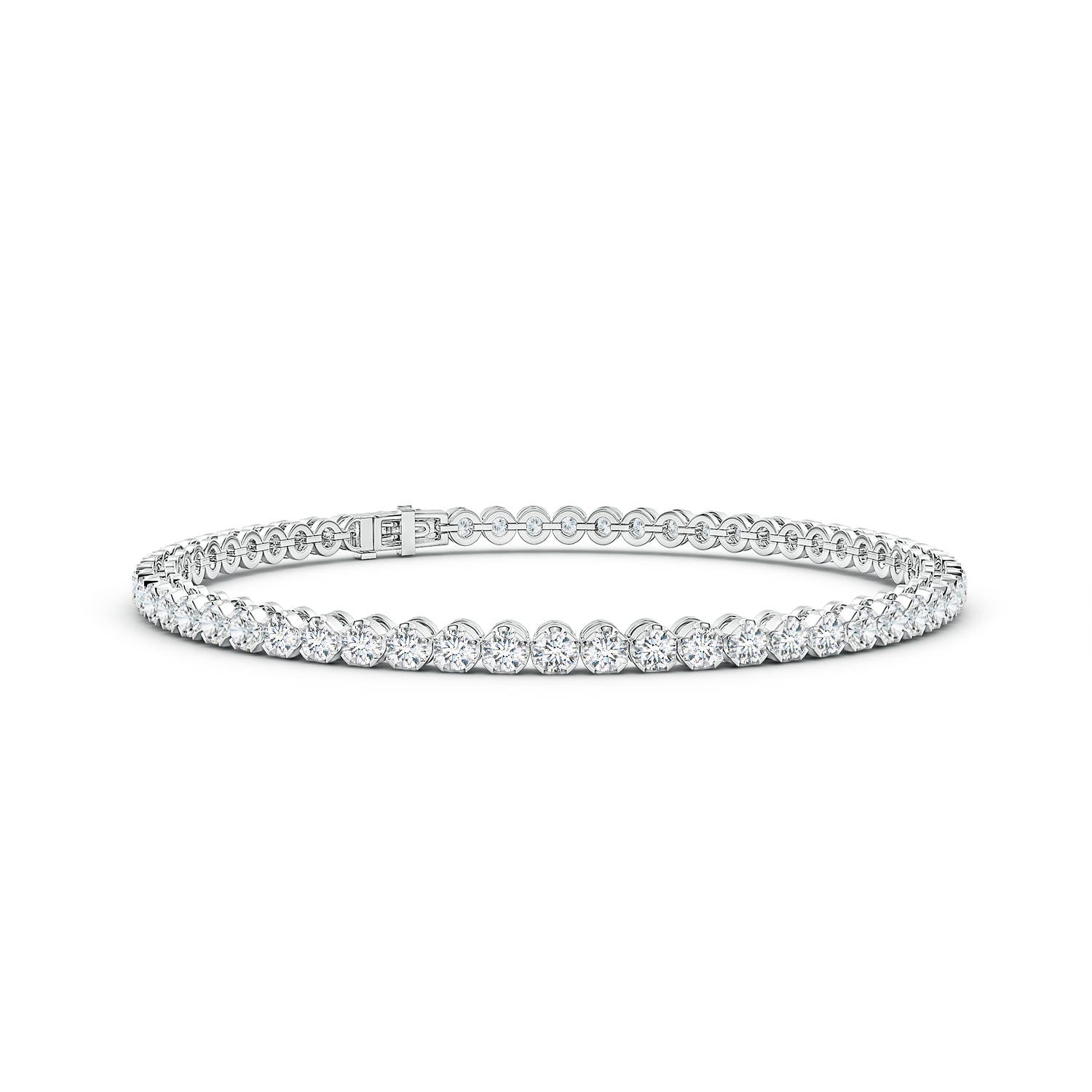
If you have been circling your first “real” fine-jewelry purchase and a lab-grown diamond tennis bracelet keeps landing in your cart, here is the honest headline before you spend a dollar: under $1,500, the smart first buy is a 1-to-2-carat bracelet in solid 14K gold, not the three-carat “influencer wrist” you have been screenshotting. That look is a $2,500–$3,500 upgrade, and any guide that pretends otherwise is quietly steering you over budget. Lab-grown stones are the reason this category is even reachable for a first-timer — per PriceScope and Forbes Vetted coverage, lab diamonds now sell for roughly 40–70% less than mined equivalents of the same grade, which is exactly why the entry piece the whole category is built around finally fits inside four figures.
After cross-referencing six price-checked bracelets against Reddit consensus, editorial roundups, and retailer certification data, one pick keeps earning “best overall value” for the beginner: the Zales 2 CT. T.W. lab-grown diamond tennis bracelet in 14K white gold at $1,199.40 on sale — the only roughly two-carat, solid-gold option that stays comfortably inside the band. It is not the highest-spec stone on this list, and there is a real catch with Signet’s pricing that we will get to. But if you want the most diamond and genuine 14K gold for your first tennis bracelet without tipping past $1,500, it is the one to beat.
How This Guide Was Compiled
We did not walk into a store and clasp these on our own wrists. This is a research roundup, and here is exactly how it was assembled so you can judge it for yourself.
First, community aggregation: we read through first-fine-jewelry and lab-diamond threads on Reddit (r/labdiamond, r/Moissanite, r/jewelry) spanning 2024–2026, watching for the products, carat weights, and complaints that surface repeatedly rather than one-off hot takes. Second, expert and editorial compile: we cross-checked the category framing against Forbes Vetted, Who What Wear, and PriceScope, all of which cover lab-grown tennis bracelets but overwhelmingly default to $2,400-and-up picks — a gap this guide exists to fill. Third, verified-reviewer sampling: we read buyer reviews on each retailer’s own product page, along with third-party review counts where they exist (for example, roughly 41 Yotpo reviews on the Angara SKU). Fourth, brand and retailer cross-check: every price, carat weight, metal, clasp type, and certification below was pulled from the live product page on August 16, 2026.
One honesty note that matters for this category specifically: lab-grown diamonds have limited resale value — per Fashionphile and RealReal secondary-market patterns, they do not hold price the way mined stones or gold itself can. Buy one because you want to wear it, not as a financial “investment,” despite what the search term suggests. We will come back to that in the FAQ.
Quick Comparison: 6 Lab-Grown Tennis Bracelets Under $1,500
| Bracelet | Carat (tw) | Metal | Price (8/16/26) | Clasp | Cert | In band? |
|---|---|---|---|---|---|---|
| Zales 2 CT (Top Pick) | 2.00 ct | 14K white gold | $1,199.40 (reg $1,999) | Lobster-claw | Card incl. | ✅ Yes |
| Grown Brilliance 1 ct WG | 1.00 ct | 14K white gold | $1,295 | Box | IGI (DE/VS1) | ✅ Yes |
| Grown Brilliance 1 ct YG | 1.00 ct | 14K yellow gold | $1,295 | Box | IGI (DE/VS1) | ✅ Yes |
| Angara LSB0463D | 1 ct entry | 14K (custom) | from ~$1,229 | Bracelet-catch | GIA/IGI | ✅ At entry config |
| Brilliant Earth Petite | 1.5 ct | 14K white gold | $995 | Link-set | IGI report | ⚠ Just under floor |
| Ross-Simons Pure 1 ct | 1.00 ct | 14kt yellow gold | $995 (7″) / $1,150 (8″) | Lobster | — | ✅ 8″ in band |
Prices move on fine jewelry; treat this table as an August 16, 2026 snapshot and reconfirm at checkout.
Top Pick / Best Overall Value: Zales 2 CT. T.W. 14K White Gold ($1,199.40)
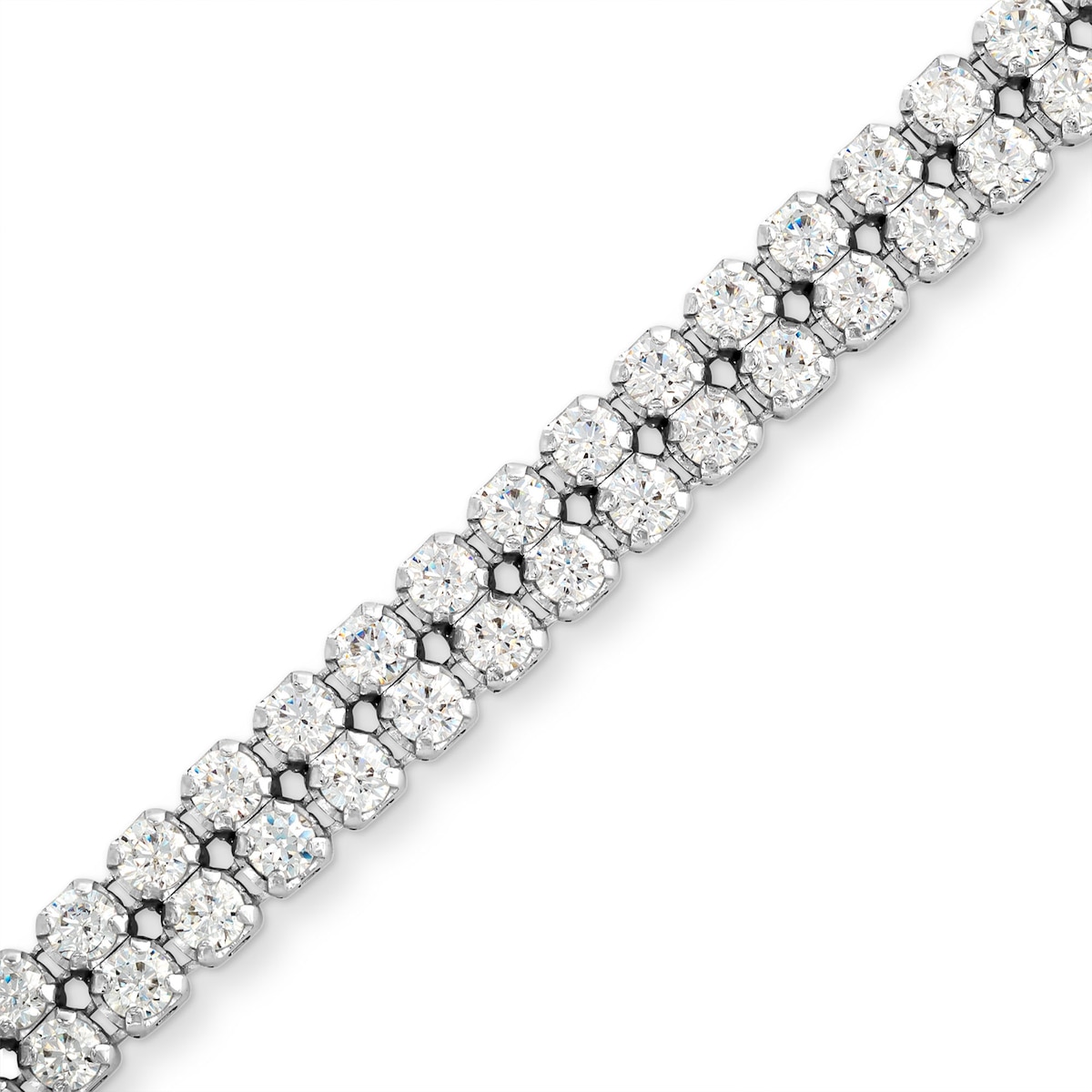
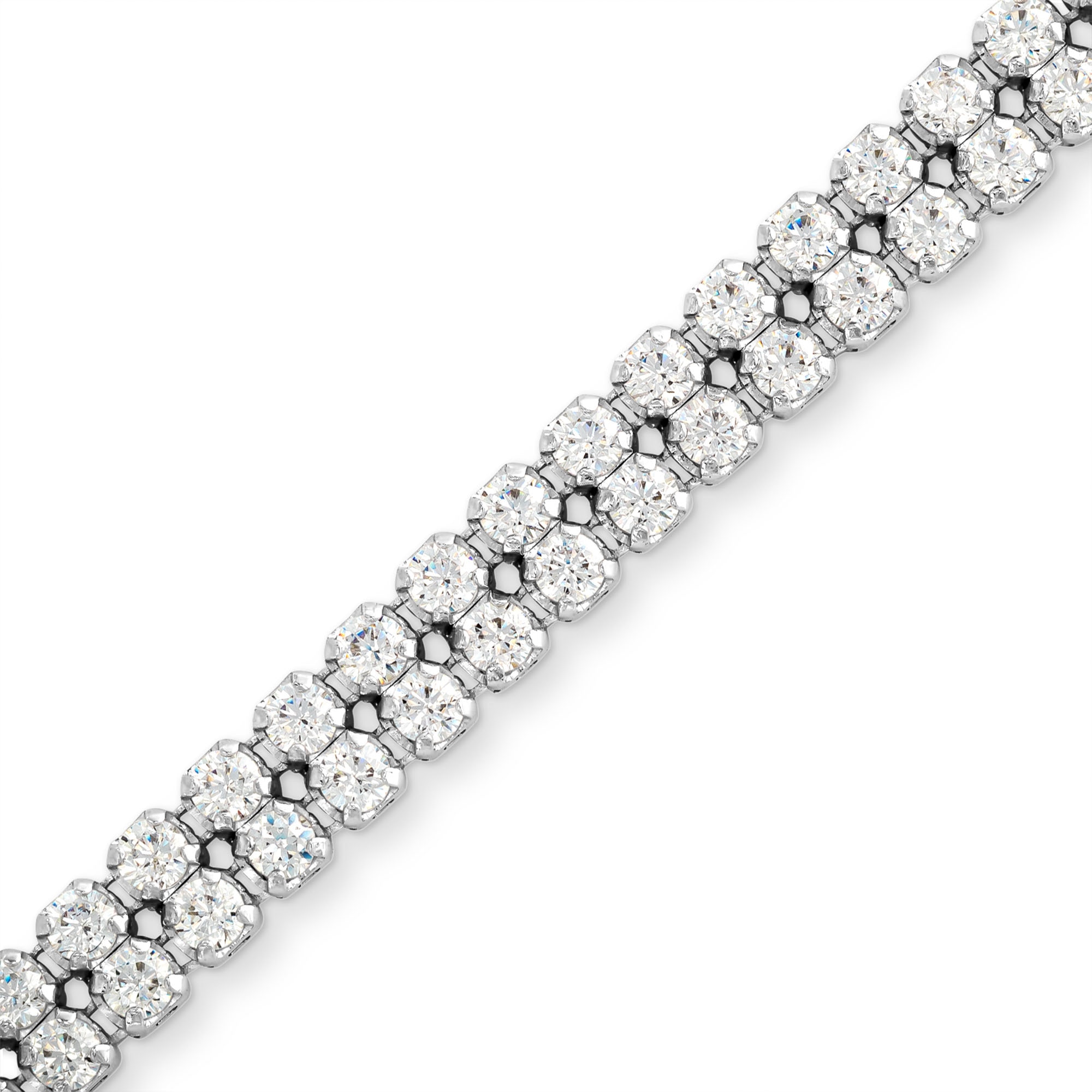
Quick stats: 2.00 ct total weight · 14K white gold · four-prong classic straight-line setting · 7.0″ · lobster-claw clasp · F color / SI2 clarity · certification card included · $1,199.40 (sale; regularly listed at $1,999.00).
This is the pick that makes the “under $1,500” promise real. Per Zales’ own live product page, it is the only bracelet in this roundup that pairs a full ~2 carats of lab-grown diamond with genuine solid 14K gold and still lands under $1,200 on sale. For a first buyer chasing the classic tennis-bracelet look — a continuous line of stones with visible presence on the wrist — nothing else here matches its carat-per-dollar.
What reviewers and the spec sheet support: the four-prong straight-line design is the traditional silhouette most first-timers picture, the F color grade is near-colorless, and Signet backs it with an optional lifetime warranty plan, free shipping, and 30-day returns per the retailer’s stated policies.
Recurring complaints (stated honestly): the biggest one is pricing theater. Per Signet’s own pricing history, this bracelet sits near-permanently on sale, so treat $1,199 as the real price and ignore the $1,999 “regular” number — do not pay full list, and if it is briefly off-sale, wait. On the stone itself, an SI2/F combination can show tiny inclusions under close inspection (SI2 is the lowest “eye-clean-ish” tier and not guaranteed flawless to the naked eye). And several jewelers note a lobster-claw clasp feels less secure on a fine bracelet than a box clasp with a safety latch.
Best fit for: the first-luxury buyer who wants maximum carat and real gold for the money and is comfortable buying strictly on sale.
Shop the Zales 2 CT Lab-Grown Diamond Tennis Bracelet 14K White Gold at Signet/Zales →
Best Everyday White Gold: Grown Brilliance 1 ctw 14K White Gold ($1,295)
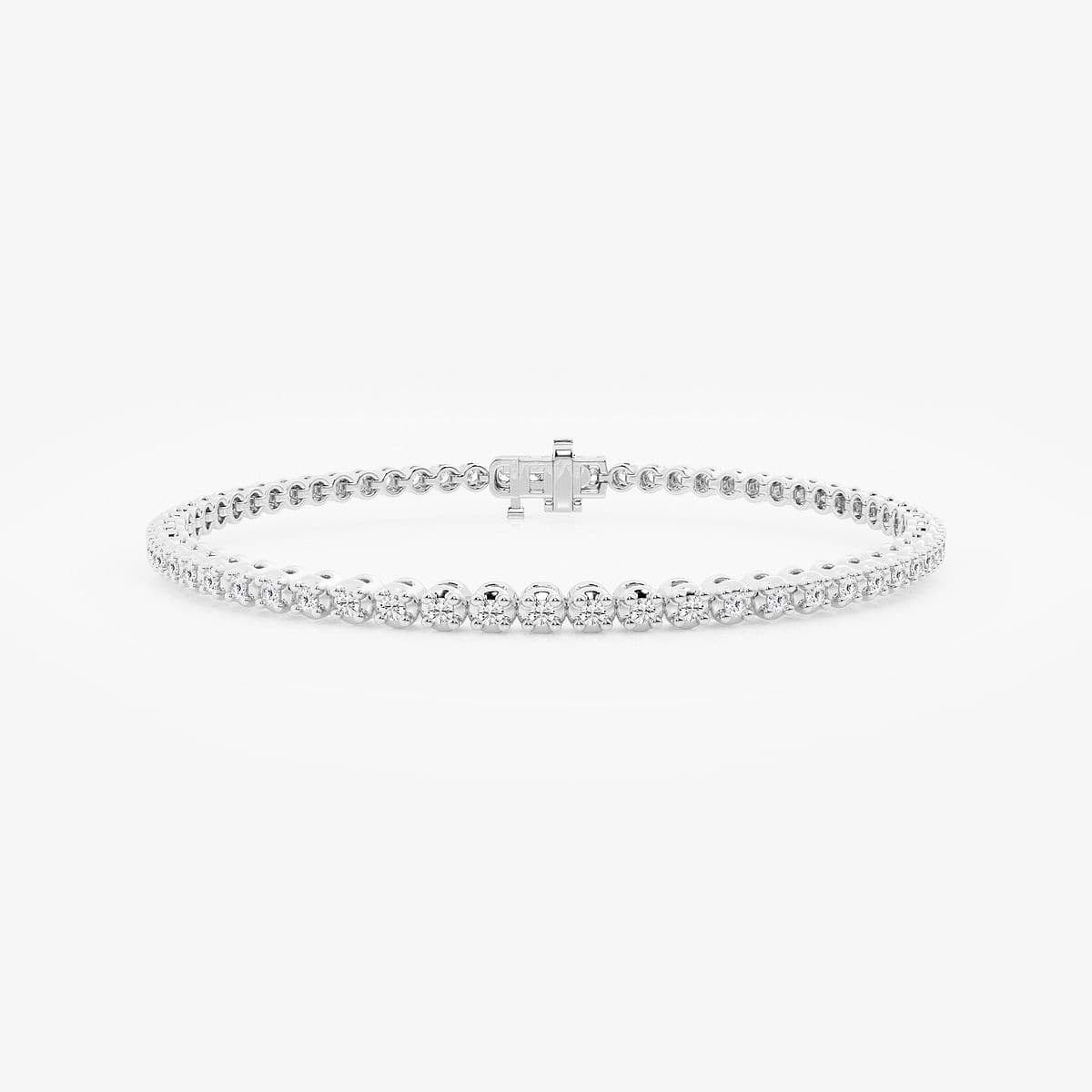
Quick stats: 1.00 ct total weight · 66 round stones · 14K white gold (rhodium-plated) · four-prong · box clasp · 7.0″ · IGI-certified DE color / VS1 clarity · $1,295.
If the Zales pick wins on carat, this one wins on stone quality and security. Per Grown Brilliance’s product page, every bracelet ships with an IGI certificate grading it DE color / VS1 clarity — a meaningfully higher grade than the Zales F/SI2 — and it uses a box clasp, the more reassuring closure for daily wear. The brand also lists a free lifetime warranty, free shipping and returns, and a price-match guarantee.
What the specs and community support: per r/labdiamond discussion, DE/VS1 at this price is a strong spec-for-dollar showing, and buyers who prioritize a clean, near-colorless look over sheer size tend to land here.
Recurring complaints: it is made-to-order (roughly a 10-day ship window, not instant gratification); one carat spread across a 7″ wrist reads genuinely dainty and thin (about 2.7mm), so it will not deliver the “statement” line of the two-carat pick; and rhodium plating on white gold wears over time and needs occasional re-dipping to keep its bright-white finish.
Best fit for: the buyer who wants the best everyday white-gold spec and a secure box clasp, and does not mind a delicate look or a short wait.
Best Yellow Gold: Grown Brilliance 1 ctw 14K Yellow Gold ($1,295)
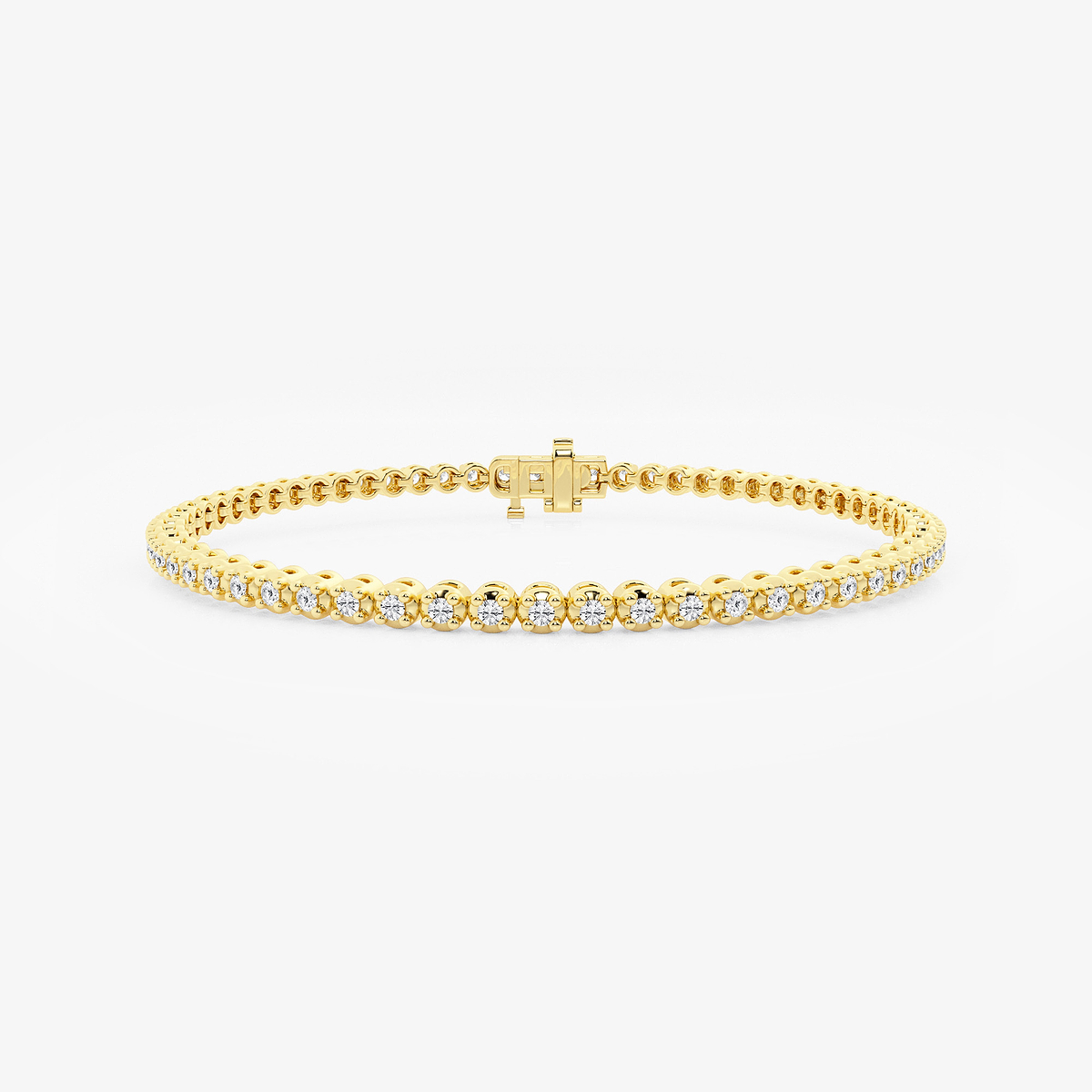
Quick stats: 1.00 ct total weight · 66 round stones · solid 14K yellow gold (no plating) · four-prong · box clasp · sizes 6.0–7.5″ · IGI-certified DE/VS1 · $1,295.
Yellow gold has been the dominant fine-jewelry metal story of the last few seasons, and this is the warm-tone sibling of the pick above. The important practical difference: it is solid 14K yellow gold with no rhodium plating to wear off, so it is arguably lower-maintenance long-term than the rhodium-plated white-gold version, while keeping the same IGI DE/VS1 grading.
What the specs support: solid (unplated) gold means no re-dipping, and the size range up to 7.5″ is a genuine plus for larger wrists that the fixed-7″ competitors ignore.
Recurring complaints: the same dainty one-carat scale critique applies — this is a refined, delicate line, not a bold one; it is made-to-order with the same lead time; and yellow gold slightly warms the apparent color of the diamonds, so purists chasing icy-white brilliance may prefer the white-gold version.
Best fit for: the trend-aware first buyer who wants warm-tone, low-maintenance solid gold and a flexible fit.
Best Customizable / Stretch-to-Ceiling: Angara Classic Round LSB0463D (from ~$1,229)
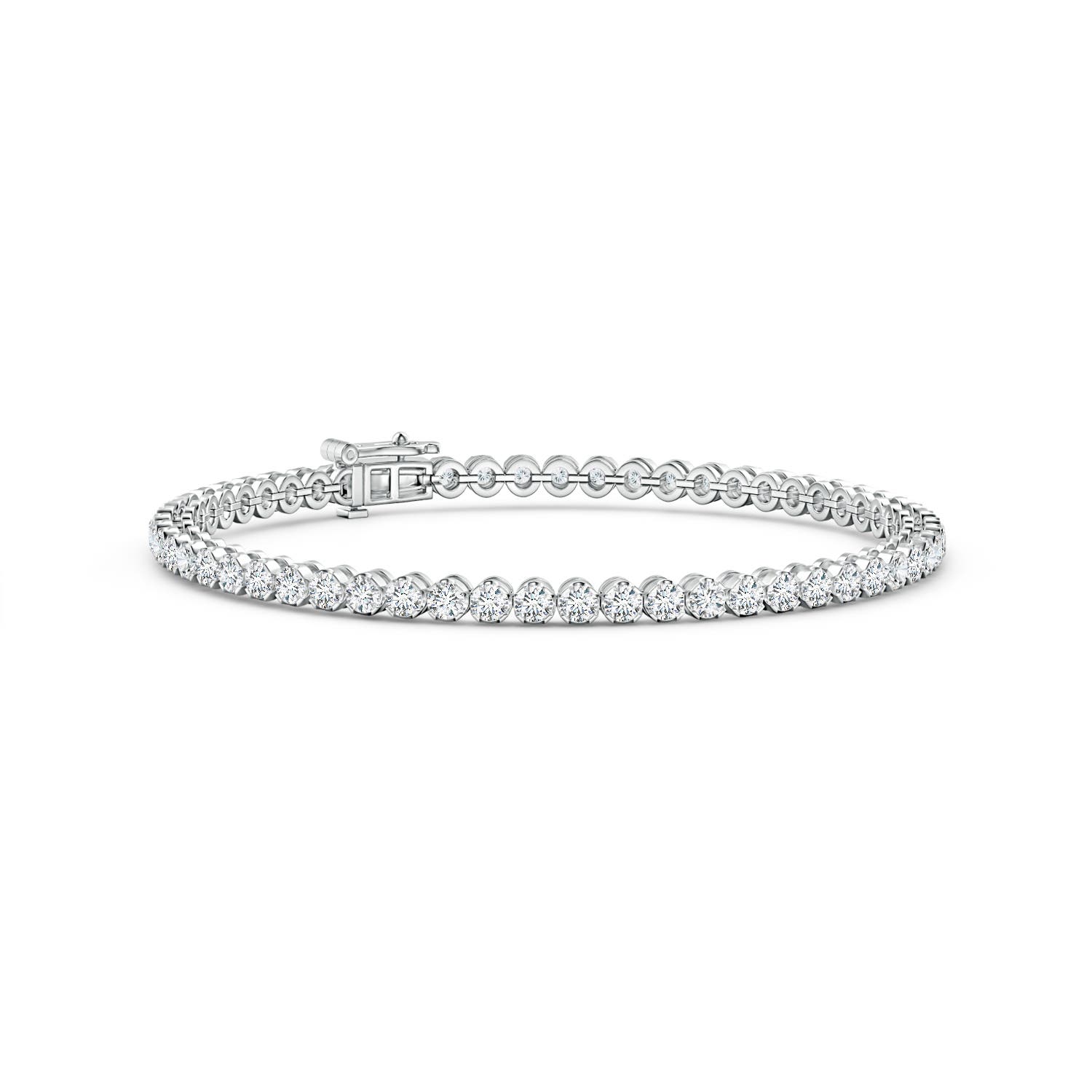
Quick stats: customizable carat (1 / 2.25 / 3 / 5 / 7 ct) and metal (14K white / yellow / rose) · prong-set · 7″ · bracelet-catch clasp · GIA/IGI certificate of authenticity · roughly 41 Yotpo reviews on the SKU · from ~$1,229 at the 1-carat entry configuration.
This is the pick for the buyer who wants to decide the trade-offs themselves. Per Angara’s product page you build the bracelet — metal color and carat weight — with a certificate of authenticity included, free express shipping, and free 30-day returns. The one-carat entry configuration lands in band around $1,229; step up to 2.25 ct and you push over $1,500, and 3 ct runs about $2,510, which is a clean illustration of exactly where the budget line sits.
What reviewers support: the ~41 Yotpo reviews on the SKU give it more independent review volume than most made-to-order fine-jewelry listings, and the metal/carat flexibility is genuinely rare at this price.
Recurring complaints: it is made-to-order with no instant ship; returns are a shorter 30-day window; the only in-band configuration is the smallest one-carat build; and the product page is upsell-heavy, nudging you toward the very carat jumps that break the budget.
Best fit for: the buyer who wants to customize metal and carat now and understands the in-band choice is the entry one-carat build.
Shop the Angara Lab-Grown Classic Round Diamond Tennis Bracelet LSB0463D at Angara →
Best Ethical / IGI Investment Feel: Brilliant Earth Petite 1.5 ct 14K White Gold ($995)
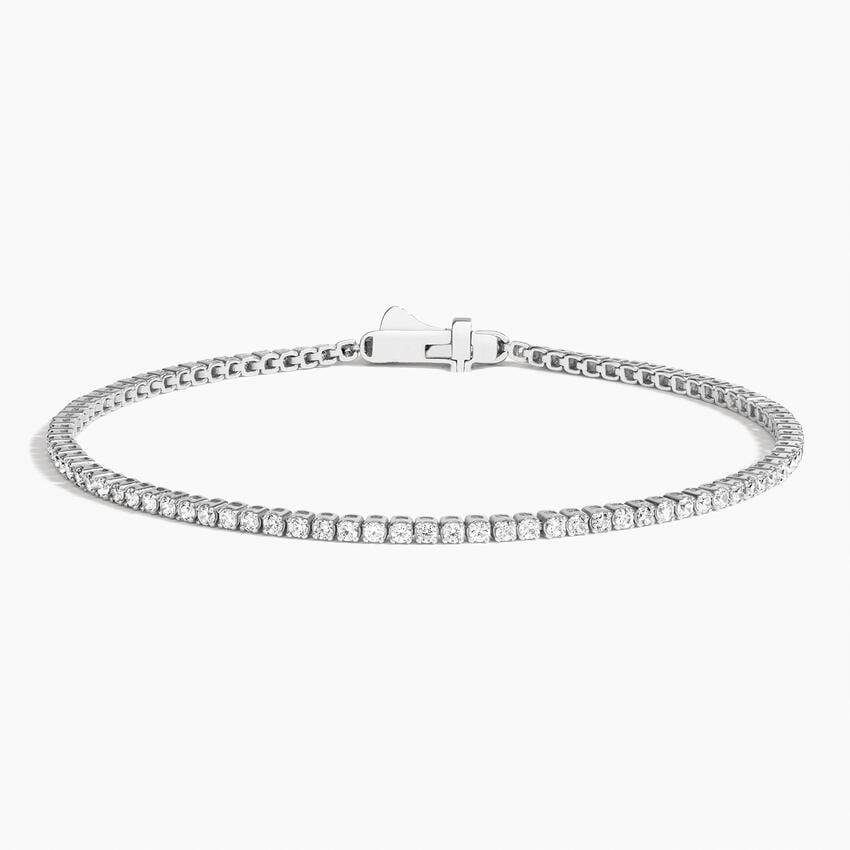
Quick stats: 1.5 ct total weight (petite line) · 14K white gold · individually set links · IGI lab grading report per bracelet · 6.5″ · $995 (yellow-gold variant also $995).
An honesty flag first: at $995 this dips just under our strict $1,050 in-band floor (about 66% of the ceiling), so we are labeling it an ethical entry option rather than a band-center pick. What earns its spot is the sourcing story. Per Brilliant Earth’s public materials, it comes with an IGI report per bracelet and the strongest conflict-free / recycled-metal positioning of any brand here — the thing a values-driven first buyer tends to care about most — plus free shipping and 30-day returns.
What the specs support: an individual grading report on a sub-$1,000 bracelet is uncommon, and the 1.5-carat weight is technically more total carat than the one-carat picks (spread across a petite 6.5″ line).
Recurring complaints: those 1.5 carats are set as small, delicate petite stones, so it reads fine and understated rather than bold; a genuinely solid-gold 2-carat version from this brand jumps to 18K at about $2,495; and you pay a brand premium versus Grown Brilliance for broadly comparable specs.
Best fit for: the ethically-minded first buyer who values certification and conflict-free sourcing over maximum on-wrist size.
Best Budget / Dainty Starter: Ross-Simons Pure 1 ct 14kt Yellow Gold ($995 / $1,150)
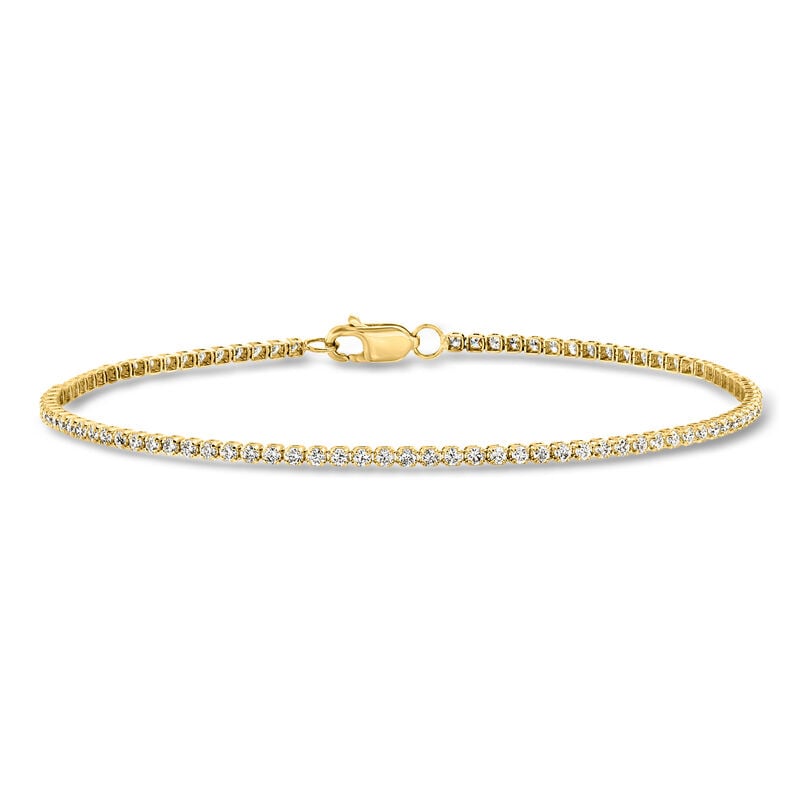
Quick stats: 1.00 ct total weight · 91 tiny round brilliants · solid 14kt yellow gold · lobster clasp · dainty (about 1/16″ wide) · G-H color / VS2-SI1 clarity · $995 for 7″, $1,150 for 8″.
Ross-Simons is a long-trusted US jewelry retailer, and this is the value entry point for solid gold. Per the product page, the 8″ configuration at $1,150 lands in band (the 7″ base at $995 sits just under the floor), and it comes with a 30-day 100% money-back guarantee and free shipping. For a first buyer who wants real 14kt gold from an established name at the lowest realistic price, it does the job.
What the specs support: solid (not plated) 14kt gold at this price is the headline, and the money-back guarantee lowers the risk of a first online fine-jewelry purchase.
Recurring complaints: the 91 micro-stones look sparse and very delicate strung along the line — this is the daintiest bracelet in the roundup; the G-H/VS2-SI1 grade is a step below the Grown Brilliance DE/VS1; and, as with the Zales pick, a lobster clasp is a known weaker point on fine bracelets than a box-with-safety closure.
Best fit for: the budget-first buyer who wants solid gold and a trusted retailer, and prefers a subtle, understated line (choose the 8″ to stay in band).
When You’re Ready to Upgrade (Over Budget, On Purpose)
If your heart is set on the three-carat “influencer wrist,” be honest with yourself about the jump — it is a different budget, not a sale away. For reference, per each brand’s live pricing: Grown Brilliance’s 2 ct runs about $1,995, James Allen’s 2 ct 14K white gold about $2,535, and Blue Nile’s four-prong lab tennis bracelet about $2,910 for 2 ct and $3,550 for 3 ct. The takeaway for a first purchase: a 1-to-2-carat bracelet under $1,500 is the sensible on-ramp, and the 3-carat look is a deliberate step-up to plan for later — not a compromise you should stretch your first budget to force.
How to Choose Your First Lab-Grown Tennis Bracelet
Decide carat vs. metal first. Under $1,500 you are trading between the two. Want the most visible line of diamonds? The Zales two-carat leads. Want the best stone grade and a secure clasp? The Grown Brilliance one-carat DE/VS1 leads. You generally cannot max both at this budget — pick the axis that matters more to you.
Check the certification. Per PriceScope guidance, a lab diamond should come with a grading report; IGI is the most common lab for lab-grown stones and is perfectly legitimate for them. Grown Brilliance, Brilliant Earth, and Angara all include reports; the Zales pick includes a certification card. Ask for the report if it is not stated.
Clasp matters more than shoppers expect. Fine bracelets get bumped all day. A box clasp with a safety latch (Grown Brilliance) is more secure than a bare lobster-claw (Zales, Ross-Simons). If you choose a lobster-clasp bracelet, consider adding an insurance rider or being mindful during wear.
Plated vs. solid. Rhodium-plated white gold looks bright but needs periodic re-dipping; solid yellow gold (the Grown Brilliance YG and Ross-Simons picks) has nothing to wear off. Factor the long-term upkeep into “value.”
Confirm the price and the size at click-time. Signet-family “regular” prices are inflated — buy on sale only. And with Angara and Ross-Simons, the in-band choice depends on the exact configuration (Angara’s 1-carat build; Ross-Simons’ 8″ length), so read the option you are actually adding to cart.
Frequently Asked Questions
Are lab-grown diamond tennis bracelets worth it? For wearing, yes — per Forbes Vetted and PriceScope coverage, lab-grown stones are chemically and optically the same as mined diamonds at roughly 40–70% less, which is why a solid-gold tennis bracelet is reachable under $1,500 at all. Just do not buy one expecting it to appreciate.
How many carats should a tennis bracelet be? Under $1,500 in solid 14K gold, realistically 1–2 carats. One carat reads dainty; two carats (the Zales pick) gives the classic continuous-line look. The three-carat “influencer” version is a $2,500+ upgrade — plan for it separately rather than stretching your first budget.
Do lab-grown diamonds have resale value? Limited. Per secondary-market patterns from Fashionphile and The RealReal, lab-grown stones do not hold value the way mined diamonds or gold can. Buy for enjoyment, not resale, despite the “investment” framing in search terms.
Is IGI or GIA better for lab-grown diamonds? For lab-grown specifically, IGI is the most widely used lab and is a legitimate, respected report — most lab-grown bracelets here (Grown Brilliance, Brilliant Earth) ship with IGI reports. GIA also grades lab stones. What matters most is that a report exists and matches the stone.
Is one carat or two carats better on the wrist? One carat (Grown Brilliance, Ross-Simons) is subtle and everyday; two carats (Zales) has real presence and photographs as the “tennis bracelet” people picture. Neither is wrong — it is a look preference, and your budget mostly decides it under $1,500.
What clasp type is best? A box clasp with a safety latch is the most secure for a fine bracelet; a lobster-claw is common but slightly less secure. Among these picks, Grown Brilliance uses a box clasp.
White gold or yellow gold? White gold (often rhodium-plated) reads icy and classic but needs occasional re-dipping; solid yellow gold is warm, on-trend, and lower-maintenance since there is no plating to wear. Grown Brilliance offers both at the same price, which makes it an easy way to compare.
Editor’s Pick Recap
For most first buyers, the Zales 2 CT 14K white gold at $1,199.40 on sale is the best overall value — the most carat and genuine solid gold you can get under $1,500, as long as you buy on sale and accept a lobster clasp. If you would rather trade size for a better stone grade and a more secure box clasp, the Grown Brilliance 1 ct DE/VS1 (white or yellow gold, $1,295) is the everyday-quality pick. Want customization, the strongest ethical sourcing, or the lowest solid-gold entry price? Angara, Brilliant Earth, and Ross-Simons cover those lanes respectively. Above all, hold the line on the honest reframe: under $1,500 means a 1-to-2-carat bracelet in 14K gold — a genuinely lovely first piece — and the three-carat look is a future upgrade, not a first purchase.
This is an editorial research roundup. We do not personally test every product; we synthesize community consensus, expert coverage, retailer verified reviews, and brand specifications, and we flag disagreement where it exists. Prices and stock were checked on August 16, 2026 and will change — confirm current pricing, carat, and configuration on the retailer’s page before you buy.
→ Related: Best First Designer Bags Under $1,500 for First-Time Luxury Buyers
→ Related: Best Entry Luxury Watches Under $1,000 for First-Time Luxury Buyers
→ Related: Best Designer Belts Under $500 for First-Time Luxury Buyers